Psoriasis is a relapsing–remitting immune-mediated skin disorder characterized by epidermal overgrowth, and massive inflammatory infiltrates as hallmarks of scaly erythematous lesions. Epigenetic changes detected in epidermal keratinocytes of resolved skin may be responsible for the DRTP (disease-residual transcriptomic profile) in the same regions, leading to a reoccurrence of the lesion. I’ll explain some ways, including new technologies for epigenetic regulation, to better treat psoriasis.
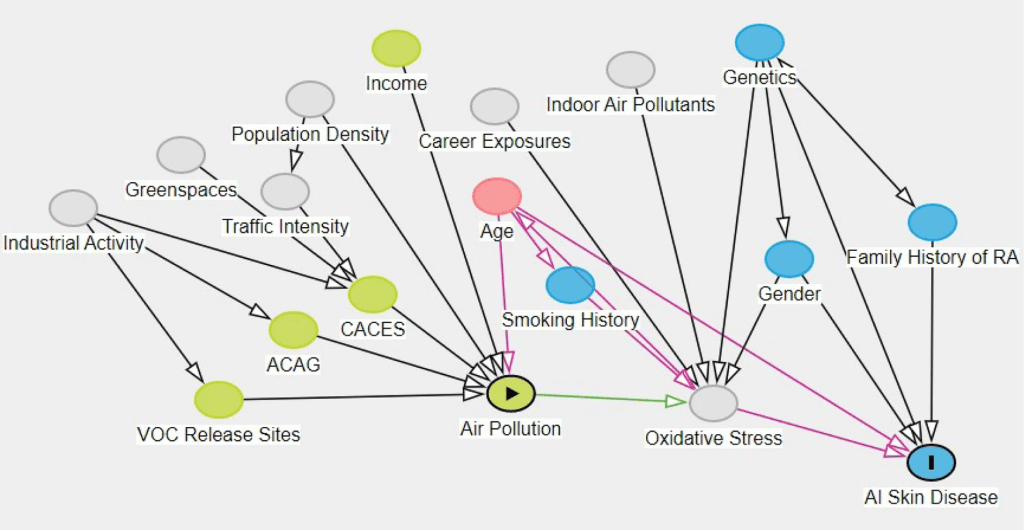
The multifactorial causes of inflammatory skin conditions, including psoriasis. From: Lowe et al (2022)
Like most diseases, psoriasis is environmentally triggered. You can think of it as mismatch between hereditary factors, including but not just genetics (Bonduriansky, 2012), and the environment. The modern environment is full of triggers for psoriasis, such as air and water pollution (Lowe et al, 2023) and poor diets (Kanda et al, 2020), and our hereditary factors have not adapted to the new environment. With over 2,000 new chemicals introduced into the USA each year, genetic based heredity will never adapt us to our ever changing environment. Evolutionary adaptation based on genetics requires too much time, usually at least thousands of years. For example, the recent introduction of eating processed food with high amounts of salt (sodium) can lead to sodium accumulation in the skin, and can be an inflammatory factor in psoriasis (Maifeld A et al, 2022), dramatically impeding skin remodeling (Pajtók et al, 2021). People haven’t yet adapted to high levels of dietary sodium, and so it is causative, at least partially, in many diseases (Lucarini et al, 2021), including psoriasis.
An example of the slow genetic hereditary adaption to the environment is lactose tolerance in some populations of humans where the environment included cattle and the milk they made available to humans. Studies of DNA from 40,000 years ago up to a few hundred years ago show that there has been a very rapid rise of the genetic variant that helps humans consume milk as adults, called lactose tolerance. The genetic variant didn’t become common until the past 1,000 to 2,000 years. With thousands of years of heredity, humans who co-evolved with cattle developed the ability to drink the milk of cattle. In East Asia, where cattle were not common, the people remained lactose intolerant (Goh et al, 2018).
However, and important to disease states such as psoriasis (Dopytalska et al, 2021), epigenetics, another hereditary factor that is not genetic, can play significant and rapid roles in adaptation to the environment (Carneiro et al, 2020). Epigenetics is not changes in the DNA itself, rather it is environmentally triggered changes in the expression of DNA. In other words, epigenetics is about what DNA is turned-on or turned-off by environmental factors. These genetic and epigenetic adaptations can turn out to be maladaptive given the rapid and ever changing environment in today’s modern world. That is, you epigenetically adapt to one thing in the environment, but another thing comes along in the environment that is a mismatch for the epigenetic adaption. That epigenetic maladaptation can pass on to your offspring and their offspring (Fitz-James and Cavalli, 2022). But there is good news. Scientists in Germany have demonstrated that maladaptive epigenetics in human skin can be reversed to some degree by using naturally sourced DNA methylation inhibitors , leading to better skin health (Falckenhayn et al, 2024). Methylation is one of the key means by which DNA can be turned-on of turned-off.
Considering psoriasis, like most bodily functions, epidermal desquamation is a highly regulated process of corneocytes shedding from the outermost layers of the stratum corneum (Haftek, 2015). Psoriasis is a condition where skin cells replicate at an abnormally fast rate. This leads to a buildup of dead, interconnected skin cells on the surface, forming the thick, silvery plaques and a lack of moisture that characterize this condition. Normal shedding of corneocytes is disrupted, leaving a thick patch of dried skin tissue.
So let’s look at how we can renormalize the physiology of psoriatic skin using three key topical products currently on the market, and one that will be released soon.
- Salicylic acid (SA)
Salicylic acid (SA) is a keratolytic that promotes stratum corneum desquamation (Elmets et al, 2021). Evidence suggests that SA works by digesting skin keratin and disrupting barriers to water-binding functions that allows the skin plaques to desquamate (Rawlings et al, 1994). Like the enzymes involved in filaggrin degradation, the hydrolases (enzymes that depend on water to breakdown the structures) involved in desmosome degradation and lipid degradation are dependent upon water for their activity. However, water activity within the stratum corneum is dependent upon the NMF and lipids. When adversely influenced by many factors, such as degraded barrier function, insufficient stratum corneum moisturization and water content leads to defective desquamation.
SA works best when an occlusive and moisturizing formulation is applied on top of the salicylic acid gel, thereby creating an environment optimal for barrier repair, where moisture is retained, thus maximizing normal enzyme activity and minimizing the irritating effects of SA.
At Neogenesis, we use an OTC drug form of SA that contains 2% salicylic acid. This is a mild form of SA and can be used daily for moderate to severe forms of psoriasis. Stronger forms of salicylic acid, which have side effects, are available by prescription from your dermatologist. As for all drugs, follow the OTC label on all salicylic acid products before applying.
2. Moisturizers
Considering the NMF and lipids that are important for treating psoriasis, NeoGenesis’ Barrier Renewal Cream (BRC) features NMF and lipid ingredients critical to barrier repair and remediating psoriasis. These ingredients include, Urea, Squalane, Caprylic/Capric Triglyceride, Safflower Oleosomes, Glycerin, Sodium PCA, Ceramide NP, Ceramide AP, Ceramide EOP, Phytosphingosine, Cholesterol, and Sodium Hyaluronate Butyrate. Not only is BRC providing necessary lipids and NMF to rebuild the epidermal barrier, but butyrate is another key molecule for epidermis. Butyrate, originating from gut bacteria and skin bacteria, has been found to increase Treg and reduce inflammation in the skin (Schwarz et al, 2017), regulate mitochondrial function of keratinocytes (Trompette et al, 2022) and to increase the expression of FLG protein by inhibiting the activity of histone deacetylase, and restoring the function and permeability of the epidermal barrier (Kleuskens et al., 2022).
3. S2RM – Stem Cell Released Molecules
The molecules in S2RM inhibit the proliferation of activated T cells, modulate the release of inflammatory cytokines and chemokines by dendritic cells and macrophages, suppress proliferation and immunoglobulin production of B cells, and inhibit cytotoxic activity of natural killer (NK) cells. The positive effects of topically applied stem cell released molecules in psoriasis are dramatic and occur quickly (Seetharaman et al, 2019). Controlling all of these functions in psoriatic skin using S2RM is highly important to controlling inflammation and autoimmunity.
4. Something New – Autoimmune, DNA Methylation Modulators
Epigenetic mechanisms of gene expression regulation are a group of the key cellular and molecular pathways that lead to inherited alterations in genes’ activity without changing their DNA coding sequence. Methylation of cytosine residues in the CpG island located in the gene promoter region of DNA causes suppression of gene expression, while these unmethylated regions of DNA leads to activation of gene expression. Modulation of methylation can therefore turn on or turn off gene expression and in this way remove or modify epigenetic “memories.” In this way, if the cells of the skin have an epigenetic memory of a chronic inflammatory event, for example, epigenetic modulators can eliminate or reduce this memory.
I won’t go into details here, but many long coding RNAs are involved in the immunopathogenesis of psoriasis (Tsoi LC et al, 2015), and long non-coding RNA (lncRNA) mediates DNA methylation in both physiological and pathological conditions (Huang et al, 2022). A lncRNA named PRINS (Psoriasis susceptibility-related RNA Gene Induced by Stress) has been found to be essential in the survival of keratinocytes under stress condition and is thought to contribute to psoriasis susceptibility (Sonkoly et al, 2005). Epigenetic changes detected in epidermal keratinocytes of resolved skin may be responsible for the DRTP (disease-residual transcriptomic profile) in the same regions, leading to a reoccurrence of the lesion (Ghaffarinia et al, 2023) . If the epigenetic changes in keratinocytes can be erased, then the reoccurrence of the psoriatic lesions may be abated.
Falckenhayn et al (2024) found that natural, plant-based DNA methylation inhibitors were able to penetrate the skin. For example, they found dihydromyricetin, which (for you chem nerds) has a molecular weight of 320.25 g/mol and a logP of 1.23 (ChemSpider) was able to penetrate into living skin cells. The positive effects they found included increased epidermal thickness and a more youthful set of cellular parameters. As a result, fewer wrinkles (3.7 tears of wrinkle accumulation were removed) were found in treated skin compared to controls. Other natural ingredients, including cannabinoids have been found to modulate DNA methylation and reduce skin autoimmunity and inflammation.
Cannabinoids are of great interest to me because I personally know the power of the endogenous cannabinoid systems in the body. When I was professor at UCSD, my lab discovered the cannabinoid signaling system in the eye, and later found with colleagues at UCSB that when the endogenous cannabinoid system is fully activated, neurons, called retinal ganglion cells, are protected from neurodegeneration. It is indeed, a very powerful system throughout the body involved in immune function and epigenetics.
For example, the first evidence describing the possible effects of CBD and CBG on DNA methylation aimed at clarifying the epigenetic regulation of keratinocyte differentiation by phytocannabinoids. Their study used human kHaCaT cells, revealing that CBD increased global DNA methylation and decreased gene expression involved in keratinocyte differentiation. In other words, CBD and CBG slowed down replication of keratinocytes. Again, psoriasis is characterized by an excessive proliferation and abnormal differentiation of keratinocytes and infiltration of multiple inflammatory cells. Interestingly, CBD effects on DNA methylation and gene expression were mimicked by AEA and blocked by a selective CB1 antagonist, suggesting an indirect mechanism rather than a direct regulation by CBD (Pucci et al, 2013). Many people haven’t heard about the power of CBG, but it is a very powerful antioxidant and anti-inflammatory in the skin (Perez et al, 2022).
I’ll tell you more about it later, but we currently have a product in testing that features a number of phytochemicals, including CBD and CBG and other epigenetic modulators. It’s sure to help a number of inflammatory skin conditions, including psoriasis. Stay tuned.
References
Bonduriansky R. (2012) Rethinking heredity, again. Trends Ecol Evol. 27(6):330-6
Carneiro VC et al (2020) Rapid Epigenetic Adaptation in Animals and Its Role in Invasiveness, Integrative and Comparative Biology, Volume 60, Issue 2, Pages 267–274,
Dopytalska K, Ciechanowicz P, Wiszniewski K, Szymańska E, Walecka I. The Role of Epigenetic Factors in Psoriasis. Int J Mol Sci. 2021 Aug 27;22(17):9294.
Elmets CA et al. (2021) Joint AAD-NPF Guidelines of care for the management and treatment of psoriasis with topical therapy and alternative medicine modalities for psoriasis severity measures. J Am Acad Dermatol. 84(2):432–470.
Falckenhayn C et al (2024) Identification of dihydromyricetin as a natural DNA methylation inhibitor with rejuvenating activity in human skin. Front Aging. 4:1258184.
Fitz-James, M.H., Cavalli, G. (2022) Molecular mechanisms of transgenerational epigenetic inheritance. Nat Rev Genet 23, 325–341.
Ghaffarinia A et al (2023) Psoriatic Resolved Skin Epidermal Keratinocytes Retain Disease-Residual Transcriptomic and Epigenomic Profiles. Int J Mol Sci. 24(5):4556
Goh LH et al (2018) Lactase deficiency and lactose intolerance in a multiracial Asian population in Malaysia. JGH Open ;2(6):307-310.
Haftek M. Epidermal barrier disorders and corneodesmosome defects. Cell Tissue Res. 2015 Jun;360(3):483-90.
Huang, W., Li, H., Yu, Q. et al. (2022) LncRNA-mediated DNA methylation: an emerging mechanism in cancer and beyond. J Exp Clin Cancer Res 41, 100.
Kanda N, Hoashi T, Saeki H. Nutrition and Psoriasis. Int J Mol Sci. 2020 Jul 29;21(15):5405.
Lowe, M.E et al (2023) The skin is no barrier to mixtures: Air pollutant mixtures and reported psoriasis or eczema in the Personalized Environment and Genes Study (PEGS). J Expo Sci Environ Epidemiol 33, 474–481.
Lucarini M et al (2021) Sodium Intake and Related Diseases. Int J Mol Sci. 22(14):7608
Maifeld A et al (2022) Skin Sodium Accumulates in Psoriasis and Reflects Disease Severity. J Invest Dermatol. 142(1):166-178.e8.
Pajtók C, Veres-Székely A, Agócs R, Szebeni B, Dobosy P, Németh I, Veréb Z, Kemény L, Szabó AJ, Vannay Á, Tulassay T, Pap D. (2021) High salt diet impairs dermal tissue remodeling in a mouse model of IMQ induced dermatitis. PLoS One. 16(11):e0258502.
Perez E, Fernandez JR, Fitzgerald C, Rouzard K, Tamura M, Savile C. (2022) In Vitro and Clinical Evaluation of Cannabigerol (CBG) Produced via Yeast Biosynthesis: A Cannabinoid with a Broad Range of Anti-Inflammatory and Skin Health-Boosting Properties. Molecules. 27(2):491.
Pucci M et al (2013) Epigenetic control of skin differentiation genes by phytocannabinoids. Br J Pharmacol. 170(3):581-91.
Rawlings AV, Scott IR, Harding CR, Bowser PA (1994) Stratum corneum moisturization at the molecular level. J Invest Dermatol 103: 731–740. (Available here: https://www.sciencedirect.com/science/article/pii/S0022202X94904472).
Schwarz A, Bruhs A, Schwarz T (2017) The Short-Chain Fatty Acid Sodium Butyrate Functions as a Regulator of the Skin Immune System. J Invest Dermatol. 137(4):855-864.
Seetharaman R et al (2019) Mesenchymal Stem Cell Conditioned Media Ameliorate Psoriasis Vulgaris: A Case Study. Case Reports in Dermatological Medicine. Volume 2019 | Article ID 8309103.
Sonkoly E et al (2005) Identification and characterization of a novel, psoriasis susceptibility-related noncoding RNA gene, PRINS. J Biol Chem. 280(25):24159-67.
Trompette, A., Pernot, J., Perdijk, O. et al. (2022) Gut-derived short-chain fatty acids modulate skin barrier integrity by promoting keratinocyte metabolism and differentiation. Mucosal Immunol 15, 908–926.
Tsoi LC et al (2015) Analysis of long non-coding RNAs highlights tissue-specific expression patterns and epigenetic profiles in normal and psoriatic skin. Genome Biol. 16(1):24.
 Dr. Greg Maguire's Skin Care