Why Use Skin-Derived Adipose Mesenchymal Stem Cell Released Molecules in Skincare – A Teleological Explanation

Adipose mesenchymal stem cells (ADSCs) have evolved to arise in the skin during the third trimester of fetal development. These cells arise just before birth so that they can be present following birth to tampen inflammation that may arise in the baby’s new hostile, non-sterile environment where the skin is under constant insult from injuries, toxins, UV, antigens, and pathogens. It’s why ADSCs and the molecules they release are preferred over, 1. bone marrow mesenchymal stem cells and platelets, which serve to induce inflammation and rapid fibrotic scarring, and 2. over umbilical cord mesenchymal stem cells, that have evolved to operate in the sterile conditions of the womb to form the cord, which is unlike skin structure and function, and since it’s a sterile environment, not dampen inflammation which is unneeded and doesn’t happen in the sterile environment where infection can’t happen. The molecules released from ADSCs are the safest and most effective stem cell released molecules to use as skin therapeutics.

Scientist think teleologically often. It’s one of the ways we reason through the discovery and invention of phenomenon. Teleology is relating to or involving the explanation of phenomena in terms of the purpose they serve rather than of the cause by which they arise. In other words, teleology or finality is a branch of causality giving the reason or an explanation for something as a function of its end, its purpose, or its goal, as opposed to as a function of its cause. Why is this thing present, what is it doing?

Adipose mesenchymal stem cells (ADSCs) have evolved to arise in the skin during the third trimester of fetal development and to be present throughout adult life. These cells arise just before birth. So the teleological questions are, why do they arise just before birth, and what are the doing in the adult skin during a person’s lifetime?

Teleologically thinking, the ADSCs are present following birth to tampen inflammation that may arise in the baby’s new hostile, non-sterile environment that presents after birth. The ADSCs arise as tissue specific stem cells in the skin that has developed during the third trimester. The stem cell niche of the skin will help to direct these ADSCs to develop in a manner that is tissue specific and serves to resolve inflammation in that adult skin. This sort of tissue specific development of the ADSCs doesn’t happen in the bone marrow or the umbilical cord, for example. Following birth, the skin is under constant insult from traumatic injuries, toxins, antigens, UV, and pathogens. Those are signals for inflammation. When the skin is compromised by these factors, evolution has given the skin an inflammatory response to fight associated infection. Any of these factors can lead to barrier disruption and an eventual infection, and the inflammatory response is the key to fighting infection. But inflammation is damaging. Not only does infection fight invading pathogens, inflammation also damages our own cells and tissues.

So inflammation has to be tampened, otherwise, if it is prolonged, necroinflammation ensues and our tissues become necrotic or otherwise damaged. Without inflammation being reduced, the damaging inflammatory pathways cause more inflammation and scale-up the damage. And what is present in adult skin to resolve inflammation? It’s the adipose mesenchymal stem cells (ADSCs) and the molecules that they release. In this case, the molecules from ADSCs can help the healing process by a number of mechanisms, including angiogenesis and reducing inflammation. The molecules from ADSCs induce an anti-inflammatory pro-regenerative state in the skin. Diabetic ulcers are example, where the necrotic tissue, such as Necrotizing fasciitis, has to be removed to reduce the inflammation. In these conditions, the ADSCs are no longer present at the site of open wound, and inflammation is hard to control. Addition of ADSC secretome facilitates the healing of the diabetic ulcer through a number of mechanisms, including the reduction of inflammation.

ADSCs are preferred over, 1. bone marrow mesenchymal stem cells and platelets, which serve to induce inflammation and rapid fibrotic scarring, and 2. over umbilical cord or placental mesenchymal stem cells, that have evolved to operate in the sterile conditions of the womb to form the cord, which is unlike skin structure and function, and since it’s a sterile environment, not dampen inflammation.

There’s much hype about cytokines from bone marrow mesenchymal stem cells. I’ve previously blogged about how bad these BMSC molecules are for the skin. Let’s quickly consider inflammation and the stem cells used by AnteAge to make their products: Bone Marrow Mesenchymal Stem Cells (BMSCs), and the molecules they release, prolong and enhance inflammation by increasing survival and function of neutrophils (Castella et al, 2011). Under hypoxic conditions, which induces the activation of TRL4, BMSCs secrete pro-inflammatory factors and decrease the polarization of macrophages from the M1 to M2 phenotype (Faulknor et al, 2017; Waterman et al, 2010). Therefore, BMSCs cultured in normal hypoxic conditions in the laboratory are secreting pro-inflammatory factors and when administered to wounded skin will induce inflammation by recruiting neutrophils and M1 type pro-inflammatory macrophages. When you put AnteAge on your skin, these are the pro-inflammatory molecules damaging your skin.

Safety and efficacy considerations: ADSCs preferred Over BMSCs

I’m asked frequently about the safety of using the molecules from ADSCs, so I’ll address it here. When addressing safety and efficacy concerns of stem cells, we must consider tissue-specific stem cells, first described by Dr. Elly Tanaka, a professor of science at the IMP in Vienna. Choosing the appropriate stem cell type to match the condition to be treated is critical not only to efficacy, but most importantly, safety of the therapeutic. Beyond the genetic and epigenetic factors that influence stem cell phenotype as embryonic stem cells differentiate into somatic stem cells, the immediate niche of the stem cell will have profound influence on the cell’s phenotype. If your wanting to regenerate skin, then use tissue specific stem cells from the skin. ADSCs and their secretome is efficacious and safe. Even ADSCs from cancer patients can been safely used for therapeutic purposes.

We don’t use umbilical cord mesenchymal stem cells (UMSCs) because they are not tissue specific to the skin, and they didn’t evolve to work in adult tissue where inflammation needs to be inhibited. Bone marrow mesenchymal stem cells (BMSCs) do appear in the skin, but only transiently in the skin during open wounds to close the wound quickly (yielding fibrotic scarring). induce inflammation (destructive to tissue), and cause high rates of proliferation (pro-oncogenic). If you think about it, the BMSCs appear transiently during an open wound to fight infection by inducing inflammation, and closing the open wound quickly by hyper-proliferation of cells. BMSCs and their released molecules didn’t evolve to be present in the skin for long periods of time – only transiently. Applying BMSC molecules for an extended time will induce too much inflammation and too much proliferation, leading to long term inflammation, fibrotic scarring, and a pro-oncogenic state.

Beyond their suboptimal efficacy profile, I’ll briefly explain some of the mechanisms underlying our choice of not using BMSCs because of a poor safety profile. The complexity of the bone marrow (BM) niche can lead to many stem cell phenotypes, whether we consider hematopoietic stem cells (HSCs) or bone marrow mesenchymal stem cells (BMSCs). Here I will discuss the properties of BMSCs, not HSCs. Because of the complexity, many BMSC phenotypes exist, including disease causing phenotypes that are varied and hard to distinguish – a part of the problem in using BMSC for therapeutic development. This complication, unlike that for ADSCS, includes recirculated cells, particularly recirculated cancer cells. Once a tumor cell disseminates into the BM, the cancer cell often displays phenotypic characteristics of BMSCs rendering cancer cells difficult to distinguish from BMSCs. BM is a site of BMSCs that may differentiate into HSCs [113] and recirculating blood cells that may differentiate into BMSCs [114,115]. BMSCs are also found outside of the niche in peripheral blood [116] and home into sites of injury [117] and cancer tissue where they are educated into becoming a pro-cancerous phenotype [118]. Recirculated melanoma and myelogenous leukemia cells [119] in BM interact with BMSCs to change the phenotype of the BMSC to one that is cancer promoting by enhancing their proliferation, migration, and invasion and altering the production of proteins involved in the regulation of the cell cycle [120]. Indeed, melanoma tumor cells start to disseminate to BM during the initial steps of tumor development [121]. In breast cancer patients, detection of recirculated cancer cells that disseminated in BM predicts recurrence of the cancer [122]. Cancer cells can fuse with BMSCs and change their phenotype [123], or release exosomes to change the phenotype of BMSCs to cancer promoting [124]. Indeed breast tumor cells fuse spontaneously with bone marrow mesenchymal stem cells [125]. This fusion may facilitate the exchange of cellular material from the cancer cell to the BMSC rendering the fused cell more oncogenic [126]. Further, others have found the same result of this fusion and exchange of cellular material, which has been found to increase metastasis. For example, Feng et al127,found that human hepatocellular carcinoma cells with a low metastatic potential exhibit a significantly increased metastatic potential following fusion with BMSCs in vitro and in xenograft studies. In the end, the BMSCs and their molecules/exosomes, having been conditioned by tumor cells, were found to increase the probability of cancer in human patients [128]. The various phenotypes of BMSCs, including the cancerous phenotypes are difficult to distinguish [36]. In contrast, even ADSCs derived from cancer patients have been found to be safe for therapeutic development [66].

One of many reasons why ADSCs are preferred compared to BMSCs is that ADSCs express a low level of major histocompatibility complex (MHC) class I molecules and do not express MHC class II and costimulatory molecules. Even the exosomes of BMSCs express MHC class II proteins [129]. These problems in BMSCs are amplified when using donor, allogeneic BMSCs that have been replicated many times, essentially aging the cells, during expansion to develop the therapeutic. This is in contradistinction to ADSCs. Critically, when comparing experimental data of BMSCs to ADSCs from the same human donor, “ADSCs have a “younger” phenotype,” according to stem cell scientists [130]. Indeed, Burrow et al found that BMSCs have, among other negative attributes compared to ADSCs, an increased level of senescence compared to matched ADSCs. Senescent cells develop the senescence-associated secretory phenotype (SASP), a pro-inflammatory set of molecules where the local tissue effects of a SASP or specific SASP components have been found to be involved in a wide variety of age-related pathologies in vivo such as hyperplastic diseases, including cancer [131]. Whereas the use of BMSC transplants has a history of medical adverse events, including the induction of cancer in the recipient (Maguire, 2019), fat grafting, along with its constituent ADSCs, have a long history of safety in medical procedures dating back to 1893 when the German surgeon Gustav Neuber transplanted adipose tissue from the arm to the orbit of the eye in an autologous procedure to fill the depressed space resulting from a postinfectious scar [132]. Fat grafting’s long history of being safe, regardless of the harvesting techniques used in patients [120,133], has been recently reviewed by physician-scientists at Baylor College of Medicine [134]. Furthermore, physician-scientists at Stanford University School of Medicine have recently reviewed the safety and efficacy of using ADSCs to augment the outcomes of autologous fat transfers [135]. 136,have found that ADSCs and fat grafting for treating breast cancer-related lymphedema is safe and efficacious during a one year follow-on, where patient-reported outcomes improved significantly with time. In a randomized, comparator-controlled, single-blind, parallel-group, multicenter study in which patients with diabetic foot ulcers were recruited consecutively from four centers, ADSCs in a hydrogel was compared to hydrogel control. Complete wound closure was achieved for 73% in the treatment group and 47% in the control group at week 8. Complete wound closure was achieved for 82% in the treatment group and 53% in the control group at week 12. The Kaplan–Meier (a non-parametric statistic used for small samples or for data without a normal distribution) median times to complete closure were 28.5 and 63.0 days for the treatment group and the control group, respectively [137]. Treatment of patients undergoing radiotherapy with adult ADSCs from lipoaspirate were followed for 31 months and patients with “otherwise untreatable patients exhibiting initial irreversible functional damage” were found to have systematic improvement or remission of symptoms in all of those evaluated [138]. In animal models with a full thickness skin wound, administration of ADSCs, either intravenously, intramuscularly, or topically, accelerates wound healing, with more rapid reepithelialization and increased granulation tissue formation [139], and topically applied the ADSCs improved skin wound healing by reducing inflammation through the induction of macrophage polarization from a pro-inflammatory (M1) to a pro-repair (M2) phenotype [140]. I’ve discussed some of the other mechanism by which ADSCs reduce inflammation in the skin in a recent blog.

Summary

Adipose mesenchymal stem cells (ADSCs), unlike stem cells from tissues other than the skin (BMSCs and UMSCs) and stem cells from non-adult sources in the womb (UMSCs), evolved to work in the skin of adults to inhibit inflammation and to reset the innate and adaptive immune systems of the skin to a anti-inflammatory, pro-regenerative healing state to maintain and regenerate normal, non-fibrotic skin structure and function.

Regenerative Versus Reparative Healing of the Skin: Why You Don’t Need Inflammation to Heal Your Skin

Inflammation is for fighting pathogens, and it is destructive to the skin. Inflammation is not needed to regenerate the skin or induce collagen production, and actually slows and impedes the healing process. There is a potent and safe means to inhibit the inflammatory pathways and promote regenerative healing in the skin -S2RM Technology- stem cell released molecules from skin derived adipose mesenchymal stem cells and fibroblasts.

From: Liu et al 2017

I continuously hear that inflammation is needed to heal the skin and to produce collagen and rebuild the matrix. This is false, and I’ll tell you why, and tell you the differences in the two healing processes, i.e 1. non-inflammatory regenerative healing versus, 2. inflammatory reparative healing.

Once we’ve exited the sterile or nearly sterile womb, most postnatal wounds heal through reparative healing, which is a complex biological process involving cells, signaling molecules such as growth factors and other cytokines, and the extracellular matrix (ECM). Wound healing is simplified and described as occurring in four overlapping, highly coordinated stages: hemostasis, inflammatory, proliferation, and remodeling. In the womb, where there are no pathogens, inflammation is not needed to fight infection – there’s no pathogens present to infect the skin. In the fetus, the immune system in the skin is only beginning to develop and is not robust, and platelets that normally rush into wounded skin are not yet fully developed, and the blood cells are being produced in the liver and not in the bone marrow. Wound healing in the fetus is vastly different from that in the adult. Adipose mesenchymal stem cells (AMSCs) arise later in fetal development in order to control and resolve the newly formed inflammatory mechanisms in the skin that are important in the adult to fight infection using an inflammatory response.

Whether it is macrophages or T cells, including γδ T-cell subsets, or other immune cells, it is the AMSCs that serve to calm the early-onset inflammation by polarizing the immune cells from an inflammatory type to an anti-inflammatory, pro-regenerative type. This is in contrast to bone marrow mesenchymal stem cells (BMSCs), which are a major source of IL-7, thus producing inflammation, and playing a pathological role in the maintenance of inflammatory CD4 memory T-cells that are involved in autoimmunity and chronic inflammation. BMSCs and the molecules they release also have oncogenic potential, another reason why they are an inferior choice for therapeutic development.

Regenerative Non-Inflammatory Healing and Reparative-Inflammatory Healing

Fetal wounds heal in utero through regenerative healing; postnatal microenvironments with an attenuated inflammatory response, such as the oral mucosa, also heal with regenerative characteristics, including a reduced immune response and scarring. Regenerative healing occurs in a manner similar to the same four stages of reparative healing, with some key differences. The key difference is that compared with reparative healing, the inflammatory response in regenerative healing is attenuated. Many of the cells involved in both innate and adaptive immunity, such as mast cells, macrophages, and neutrophils, are not yet differentiated or are not responsive to the wound where regenerative healing occurs. Therefore, levels of inflammatory cytokines and chemokines are reduced or absent in regenerative healing.

Increased expression of anti-inflammatory cytokine IL-10 in postnatal regenerative healing helps decrease the inflammatory response. Adipose mesenchymal stem cells are a key source of the IL-10 secreted into the skin, and thus promoting regenerative healing. A number of studies suggests that IL-10 not only indirectly modulates fibrosis via its anti-inflammatory properties but may also stimulate fetal-like fibroblast behavior and thus fetal-like ECM production. If scar tissue is to be of normal structure, regenerative healing must take place. The secretion of IL-10 from AMSCs is key to inducing regenerative healing in adult skin. One mechanism to explain the ability of IL-10 to inhibit inflammation is that it inhibits NF-κB activity by inhibiting nuclear translocation of NF-κB by blocking IκBα degradation in response to TNF stimulation.

Collagen Production in Wound Healing – Inflammation Degrades Collagen, Not Produce It

Collagen production in the skin to aid in healing, is mainly derived from fibroblasts, but also by keratinocytes. Fibroblasts have evolved to regulate their synthesis of collagen and other extracellular matrix proteins in response to mechanical tension. Fibroblasts are also induced to secrete collagen by the molecules released from AMSCs. It’s not inflammation that stimulates the production of collagen. Tissue damage caused by inflammation from an infection or an autoimmune disease triggers degradation of collagen in the extracellular matrix (ECM), which further enhances inflammation. So inflammation is degrading collagen, not producing it. Also know that dermal collagen has a half-life of about 15 years, a very long-lived protein, a feature that predisposes collagen to accumulate lesions such as advanced glycosylation end products (AGE), which have damaging effects on the molecules they bind. So with much collagen in the skin lasting for decades, accumulating damage through inflammation is occurring. The secretome from AMSCs can protect these long-lived collagen proteins from inflammatory damage, while also helping to replace damaged collagen. 

Non-Inflammatory Immune Cells, M2 Macrophages are Anti-inflammatory and Pro-Regenerative

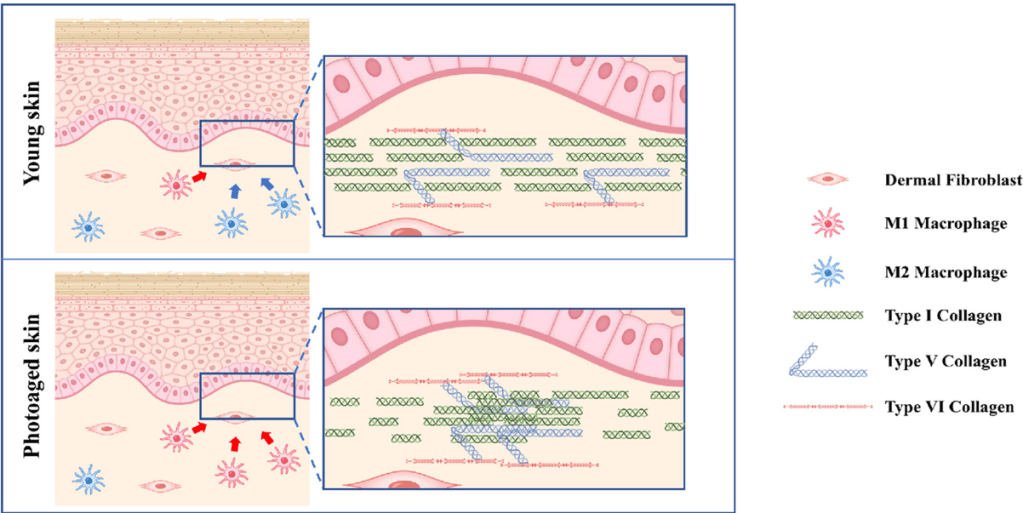
Often, the delay in tissue healing results from the inflammatory phase of the wound healing. Non-healing wounds result from chronic inflammation, characterized by an overload of inflammatory immune cells, inflammatory cytokines, and proteolytic enzymes. Chronic wounds share certain common features, including excessive levels of proinflammatory cytokines, proteases, ROS, senescent cells, persistent infection, and a deficiency of stem cells and their released molecules that are often also dysfunctional. Chronic wounds are defined as wounds stalled in a constant and excessive inflammatory state. For example, much evidence has revealed that chronic wounds are closely associated with impaired phenotype transition of pro-inflammatory macrophages (M1) to anti-inflammatory phenotypes (M2) in wounds. The secretome from AMSCs biases the macrophage phenotype from an inflammatory M1 to an anti-inflammatory, pro-regeneration M2 phenotype, and greatly aids in wound healing. An example of the pro-healing effects is that M2 macrophages induced the expression of the proteins required for the assembly of collagen fibrils, and macrophages themselves secrete some forms of collagen. A shift towards M2 in the M1/M2 balance improves not only the quantity but also the quality of collagen fibrils, leading to a non-fibrotic scar. M2 macrophages induce the expression of the proteins required for the assembly of collagen fibrils,

From: Horiba et al (2023)

In wounds, the continued infiltration of pro-inflammatory immune cells and production of pro-inflammatory molecules attract additional inflammatory immune cells, exacerbating the inflammation. Thus, inflammation is preventing wound healing. If you think inflammation is needed to clear debris in a wound, including “sterile inflammation,” think again. During the resolution of inflammation, macrophages are predominantly polarized to an M2 phenotype (non-inflammatory), which can suppress proinflammatory cytokine production, clear debris, and restore tissue homeostasis. Yes, M2 macrophages are phagocytic – meaning they eat debris. Again, wounds don’t need inflammation to heal, whether it’s an infected wound, or “sterile inflammation” where debris is present without infection.

The Inflammatory NK-kB Pathways Are Pro-Inflammatory and Impede Wound Healing

Recent studies have found the genes and pathways involved in the induction of inflammation, called, NF-kB, and that these genes and pathways are also involved in aging and many disease processes. The NF-kB pathways underlying inflammation, diseases, and aging (inflammasome) are different from the genes and pathways that are activated during injury and responsible for regenerative healing.

Leung et al (2013) at Stanford did a nice study separating out the two pathways involved in adult healing, i.e. the NF-kB pathways. They found that hypochlorite (HOCl) reversibly inhibited the expression of CCL2 and SOD2, two NF-κB–dependent genes. In radiation dermatitis, topical HOCl (aka Bleach) inhibited the expression of NF-κB–dependent genes, decreased disease severity, and prevented skin ulceration. Additionally, skin of aged HOCl-treated mice acquired enhanced epidermal thickness and proliferation, comparable to skin in juvenile animals. In other words, inhibiting inflammation helped to heal the skin when injured through irradiation or aging.

Platelets, Bone Marrow Mesenchymal Stem Cells, and Their Molecules Induce Inflammation

This is why you don’t want to use a platelet extract or PRP on your skin, because platelets and their molecules induce inflammation. It’s also why you don’t want to use bone marrow mesenchymal stem cell derived molecules because they too are pro-inflammatory and can induce, through IL-7, autoimmunity and tissue destruction. Both of these cell types only appear transiently in open wounds through the blood supply and serve to induce inflammation to fight infection, and to induce high rates of fibrotic scarring to close the wound rapidly (see Maguire, 2022).

Adipose Mesenchymal Stem Cells and Their Molecules Reduce Inflammation

There’s another safe and effective means to inhibit the inflammatory pathways associated with NF-kB, and that is the secretome from AMSCs, which is contained in the S2RM Technology of NeoGenesis. González-Cubero et al (2022) in Spain found that in inflamed human cells from connective tissue, like that found in the skin, when exposed to the molecules released from AMSCS, NF-κB activation was blocked. Thus, the secretome from AMSCs blocked inflammation by blocking the NF-kB pathways. Adipose mesenchymal stem cells and their released molecules act in many other ways in addition to inhibiting NF-kB to reduce inflammation.

Chronic Inflammation

So the adipose mesenchymal stem cells reduce inflammation and this is critical for autoimmunity. Tregs control other T cells from over activating and causing damaging inflammation. It is important to keep Treg cell functioning because they tend to lose their regulatory capacity under chronic severe inflammatory conditions. If a patient’s Treg cell function is compromised or defective, their immune system can become excessively activated, leading to systemic autoimmune inflammation. So AMSCs controlling inflammation in turn controls Treg cell function and reduces T cell mediated autoimmune inflammation.

Summary – Inflammation is Unwanted in Wound Healing and Adipose Mesenchymal Stem Cells Deactivate Inflammation and Activate Regenerative Healing

In summary, inflammation does not heal the skin and does not produce collagen. Inflammation is unwanted in the skin unless their is an infection and the pathogens need to be destroyed. Unfortunately, in the process of killing the pathogens, the inflammation also damages your cells and connective tissues. To effectively and safely decrease inflammation and activate regenerative wound healing, use NeoGenesis Recovery which is loaded with the molecules released from AMSCs that reduce inflammation and activate pro-healing regenerative mechanisms.

Air Pollution and Eczema on the Rise

Air pollution is wreaking havoc on your skin. Simple steps to mitigate the problems associated with pollution include gentle cleansing, topical products to reduce oxidative stress and to restore barrier function.

Whether it’s jet fuel, leaded fuel for non-jet aircraft, auto exhaust, forest fires, wars such as Iraq, Gaza, and the Ukraine, or industrial fumes as causative factors, “the estimated lifetime prevalence of atopic dermatitis has increased 2~3 fold during over the past 30 years, especially in urban areas in industrialized countries, emphasizing the importance of life-style and environment in the pathogenesis of atopic diseases” (Kim, 2015). “Atopic dermatitis (AD) has increased in prevalence to become the most common inflammatory skin condition globally, and geographic variation and migration studies suggest an important role for environmental triggers” (Fadadu et al, 2023).

Air pollution can make people more sensitive to other allergens by eliciting an immune system hyper-response. This can degrade the skin’s barrier function, and now that immune system hyper-alert signaling is more exposed to the outside world and even more sensitive. Essentially, air pollution is opening up the skin by degrading it’s barrier, and making that contact between the skin’s immune system and the environment more robust. Air pollution is a catalyst in a chemical reaction, as scientists at the Max Planck Institute have written, “Fine particulate matter catalyzes oxidative stress.” The key, air pollution is causing oxidative stress in the skin, leading to chronic inflammation, a root cause in many inflammatory skin conditions, including eczema.

The illustration shows the health effects of atmospheric air pollution. The model simulations of Thomas Berkemeier and his team suggest that PM2.5 acts by conversion of a reservoir of reactive oxygen species (such as peroxides) into highly reactive OH radicals. these reactions take place in the epithelial tissue fluid, which is a thin aqueous film in the lungs and skin in which air pollutants dissolve or deposit.

For day-to-day protection from modern man’s air and water pollution and climate change (think increased fires), use air filters for the home and use mineral sunscreens with zinc or titanium, which create a physical barrier that makes it more difficult for airborne pollutants to come into direct contact with the skin. It’s also important to have a good cleansing regime. Wash the pollutants off at night with a gentle cleanser, use a product that reduces the oxidative stress, and then put on a fragrance-free hypoallergenic moisturizer containing free fatty acids, ceramide, and cholesterol that will help the skin barrier heal overnight.

Reducing Sodium Intake Not Only Reduces Blood Pressure, Skin Inflammation is Reduced

In a recent trial (Gupta et al, 2023), the blood pressure–lowering effect of dietary sodium reduction was comparable with a commonly used first-line antihypertensive medication. Salt in the diet is associated with chronic kidney disease. Sodium also accumulates in the skin, inducing inflammation and eczema, so feel better and look better by cutting the sodium intake that is way too high in most people.

I discuss at length in my book, Thinking and Eating For Two: The Science of Using Systems 1 and 2 Thinking to Nourish Self and Symbionts, how diet is key to all chronic diseases. All of the dietary components work together to largely determine health status – not just one and certainly not just genetic factors. Genetics has little to do with health status for most people. Hereditary factors, such as epigenetic transgenerational inheritance and protein inheritance, may have an important influence, but not genetics. It’s the exposome that counts – i.e. all of the things that you’re exposed to in life – and, all of the things that you’re parents and their parents were exposed to. That’s the transgenerational epigenetic inheritance and protein inheritance aspect of the exposome. Now research at the University of California, San Francisco (UCSF) and UC Berkeley, suggests that high levels of dietary sodium may raise the risk of developing atopic dermatitis.

Many factors can influence health, including that of the skin. I’ll discuss salt here, but other factors such as dairy play a big role too – both for cardiovascular health, and skin health. For example, the induction of antibodies (IgE) by the consumption of dairy can lead to cardiovascular disease and death. And dairy, loaded with antigens such as lactose, whey, and casein (even found in mothers milk because of dairy consumption by mom) can be destructive to the skin, even causing cancer.

As Gupta et al (2023) discovered, dietary sodium reduction significantly lowered blood pressure (BP) in the majority of middle-aged to elderly adults they studied. The decline in BP of those who went from a high- to low-sodium diet was independent of hypertension status and antihypertensive medication use, and was consistent across subgroups. Needless to say, reducing sodium intake did not result in adverse events.

Sodium is an essential mineral and osmolyte for the human body. It is the major cation in the extracellular fluid and as such plays a crucial role in homeostatic processes such as regulation of blood volume, osmolarity, and blood pressure. Therefore, sodium plasma concentration is maintained within a relatively narrow range of around 140 mmol/l. The sodium concentration in the interstitial space (the space in between our cells) can be much higher. We consume just the right amount of sodium when we eat a plant based diet without added sodium. If we eat too much sodium, that excessive salt intake may induce several adverse effects, causing microvascular endothelial inflammation, anatomical remodeling, and functional abnormalities, even in normotensive subjects (those with normal blood pressure). More recent studies have shown that changes in sodium plasma levels not only exert their effects on small resistance arteries, but may also affect the function and structure of large elastic arteries. The issue of salt-sensitivity, which refers to individual susceptibility in terms of BP variations following changes in dietary salt intake, has also been recently debated in its pathophysiological mechanisms and clinical implications.

Excess sodium is also stored in the skin.  In the skin microenvironment, higher sodium concentrations enhance macrophage function, potentially leading to innate immune system-based inflammation. Several studies have provided significant evidence that an elevated sodium concentration has an immunomodulating effect by augmenting proinflammatory and antimicrobial macrophage function as well as T-cell activation. And now we know that sodium has accumulated to high levels in the skin of psoriasis patients (Maifeld et al, 2021). Psoriasis is an inflammatory skin condition, and restricting salt in your diet will help to reduce that inflammation. Same for eczema. Reduce the salt because, for one factor, salt promotes the growth of a bad bacteria called staph aureus which is found in patients who have bad flare ups of eczema. With high salt, the skin is unable to repair itself – it’s in a constant state of inflammation.

Cut the salt and your immune system will operate more normally. It requires time to adjust your taste to the low sodium diet – most of us are addicted to salt. But in time, you lose the addiction, and actually begin to better taste all of the other flavors in your food that were masked by the salt. Bon appetite, Pas de sel!

Stem Cell Aging and Loss of Tissue Maintenance Because of Inflammaging

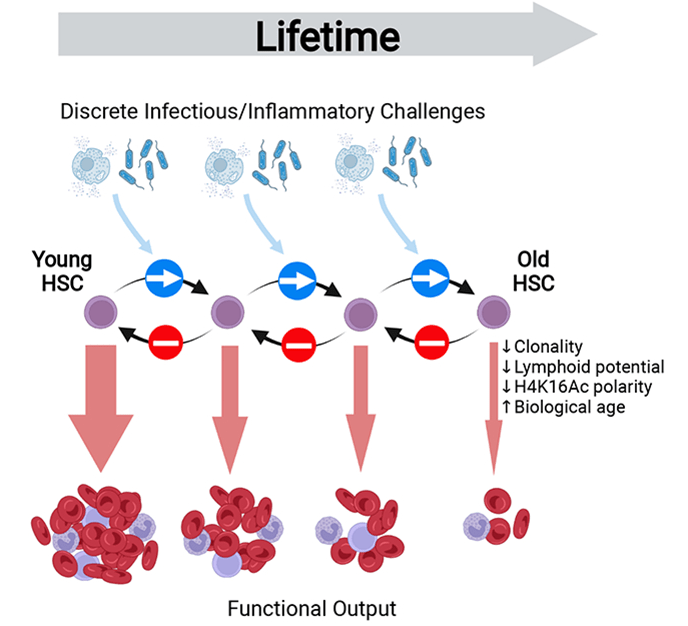
Early and mid-life inflammation ia a mediator of lifelong defects in tissue maintenance and regeneration due to the inflammation aging the stem cells. Inflammation damages the extracellular matrix, DNA, and epigenetic mechanisms, all of which contribute to aging and age-related diseases.

A schematic of stem cell inflammaging (from Bogeska et al, 2022)

Inflammaging, defined as an age-related increase in the levels of pro-inflammatory markers in blood and tissues, is a strong risk factor for multiple diseases that are highly prevalent, and frequent causes of disabilities in elderly individuals but are pathophysiologically uncorrelated, i.e., everything from cancer, to skin diseases, to heart disease, and neurodegeneration. And remember, as I’ve discussed in previous blogs, inflammation in the skin can can lead to systemic inflammation.

Inflammation can wreak havoc on the body, including the skin, through a number of key mechanisms. Let’s have a look at how inflammation can damage tissue, such as by degrading the extracellular matrix, and can damage cells at the molecular level through genetic and epigenetic mechanisms. Genetic refers to how damage occurs to the DNA, and epigenetic refers to how damage occurs “above” the DNA, such as the mechanisms that control the expression of DNA – i.e., affecting how the DNA makes RNA and proteins. Inflammation can also cause misfolding in proteins, resulting in a number of dysfunctional pathways in the body, including the control of epigenetics such as protein-based epigenetics. You read that right – proteins can be inherited and dysfunctional proteins in an adult can be inherited as dysfunctional proteins in the offspring. That’s one reason why genetics and heredity don’t mean the same thing.

Inflammaging is a process induced by chronic inflammatory cytokine signaling that promotes accelerated damage to the extracellular matrix (ECM), stem-cell aging, and precancer stem-cell generation. Multiple different sterile and infection-associated inflammatory stimuli have been shown to provoke primitive stem cells (HSCs) to exit their long-term quiescent state and enter into active proliferation. In other words, inflammation, whether it is sterile inflammation or infection-related inflammation, drives stem cells into a state where they multiply. Therefore, chronic inflammation will induce the constant multiplication of stem cells. And every time a cell multiplies itself, mutations and consequent aging processes will occur. As I’ve said before, one of the most dangerous things a cell can do is to multiply itself. 

As scientists have recently published, their work demonstrates that inflammatory stimuli can provoke a long-lasting inhibitory effect on tissue regeneration that extends far beyond the duration of the original inflammatory event, via the progressive and irreversible attrition of the functional stem cell pool. They argue that prophylactic anti-inflammatory interventions may effectively delay or prevent the evolution of age-associated pathologies, but that such treatments may hold limited capacity to rejuvenate an already aged stem cell system. 

In other words, it is important to reduce inflammation even during our younger years, not just during our aged period, in order to reduce stem cell aging processes. This means eating a plant-forward diet, full of lots of fruits and vegetables, as well as using sunscreen during long sun exposures, as well as using skin products that are not inflammatory – rather using skin care products that reduce inflammation and those that help to maintain or build the skin’s barrier function.

Eczema (Atopic Dermatitis): Delayed Gut Microbiota Maturation in the First Year of Life is a Hallmark of Pediatric Allergic Disease

Allergic diseases affect millions of people worldwide, and are on the rise. An increase in the prevalence of these diseases has been associated with alterations in the gut microbiome, i.e., the microorganisms within the gastrointestinal tract. Maturation of the infant immune system and gut microbiota occur in parallel; thus, the normal development of the microbiome likely determines tolerant immune programming in the infant. Antigens are substances that can produce an immune response, and tolerant immune programming is a mechanism of immune tolerance where the self-antigen is protected from the immune system’s destructive response. Thus the immune system is programmed to be destructive against non-self-antigens (bacteria and viruses contain non-delf antigens, for example), but not self antigens. 

A new study reported that a trend in maturation alteration is characterized by depletions in the bacterial species A. hadrus, F. saccharivorans, E. hallii, and B. wexlerae in participants who later developed allergic diseases, as well as enrichments in E. lenta, C. innocuum, E. faecalis, E. coli, and T. nexilis in these participants. The depleted bacterial populations are known short-chain fatty acid (SCFA) producers, notably the butyrate producers A. hadrus, E. hallii, and F. saccharivorans and the acetate producer B. wexlerae; SCFAs are metabolites that mediate well-defined host benefits within the gut. The authors also reported a depletion of butyrate in allergy-prone participants and significant associations between A. hadrus and F. saccharivorans respective relative abundance and butyrate concentration. This strengthens the postulation that the production of butyrate and its effect on immune cells is a mode by which optimal immune modulation occurs during early life. In contrast, species enriched in allergy-prone participants have been linked to pathogenic activity and poor health outcomes, with many of these microbiome features associating with metabolites enriched within these same participants.

Most diseases are consequence of our exposome, and not hereditary genetic factors. Our exposome greatly affects our microbiome. Established primarily during infancy, the developing microbiota’s initial expansion and fluctuation are particularly sensitive to external influences before reaching a more stable community. Sensitivity of the microbiome is most pronounced during infancy, and abnormal exposures, such as that in a hospital setting, especially during a C-section, that can drastically alter the microbiome. The number of C-Sections in 2015 doubled in comparison to those registered in 2000, and jurisdictions such as California have instituted programs to stop the medical practice of performing unneeded C-sections. Indeed, many risk factors for allergic diseases, including mode of delivery, diet, urban living, and antibiotic exposure (such as the overprescribed broad spectrum antibiotic Amoxicillin), also influence early microbiota membership and structure. Note: the broad spectrum antibiotics are particularly harmful because the drug kills so many beneficial types of bacteria. While this maturation process usually coincides with the development of healthy immune tolerance, allergic sensitization can emerge in many children because of their exposome during the same period as the microbiota is being established.

Overall, the authors compared 1115 children with asthma, allergic rhinitis, food allergy, or Eczema (atopic dermatitis) to a rigorously defined, non-allergic comparator group. They described detailed underpinnings driving this decrease in gut microbiome maturation, encompassed within the alteration of a core group of bacterial species, functional pathways (i.e., potential intestinal mucous integrity breakdown, elevated oxidative stress levels, and subsequently oxidized monosaccharides, and diminished secondary fermentation), and metabolic imbalance i.e., elevated trace amines that can be involved in inflammation and neural function, and associated with reduced microbiota-maturation age and elevated risk of allergy.

Bottom line, the infant exposome is critical for the development of a normal microbiome and a life without allergy and skin conditions without Eczema.

Safety and Efficacy Considerations of Stem Cell Technologies for Skin Care: : ADSCs preferred Over BMSCs

Mesenchymal Stem Cells and their Progenitor Cells (Fibroblasts) Derived from Skin are Superior to Bone Marrow Derived Mesenchymal Stem Cells

When addressing safety and efficacy concerns of stem cells, we must consider tissue-specific stem cells. Choosing the appropriate stem cell type to match the condition to be treated is critical not only to efficacy, but most importantly, safety of the therapeutic. Beyond the genetic and epigenetic factors that influence stem cell phenotype as embryonic stem cells differentiate into somatic stem cells, the immediate niche of the stem cell will have profound influence on the cell’s phenotype. Therefore, the appropriate use of adipose derived mesenchymal stem cells (ADSCs), and their related progenitor cells from the skin, fibroblasts, is optimal for skin care compared to bone marrow mesenchymal stem cells (BMSCs)

Let’s consider some of the problems BMSCs pose for developing skin care products. The complexity of the bone marrow (BM) niche can lead to many stem cell phenotypes, whether we consider hematopoietic stem cells (HSCs) or bone marrow mesenchymal stem cells (BMSCs). Here I will discuss the properties of BMSCs, not HSCs. Because of the complexity, many BMSC phenotypes exist, including disease causing phenotypes that are varied and hard to distinguish – a part of the problem in using BMSC for therapeutic development. This complication, unlike that for ADSCS, includes recirculated cells, particularly recirculated cancer cells. Once a tumor cell disseminates into the BM, the cancer cell often displays phenotypic characteristics of BMSCs rendering cancer cells difficult to distinguish from BMSCs. BM is a site of BMSCs that may differentiate into HSCs and recirculating blood cells that may differentiate into BMSCs [see Cardenas et al; Tondreau et al]. BMSCs are also found outside of the niche in peripheral blood and home into sites of injury and cancer tissue where they are educated into becoming a pro-cancerous phenotype. Recirculated melanoma and myelogenous leukemia cells in BM interact with BMSCs to change the phenotype of the BMSC to one that is cancer promoting by enhancing their proliferation, migration, and invasion and altering the production of proteins involved in the regulation of the cell cycle. Indeed, melanoma tumor cells start to disseminate to BM during the initial steps of tumor development. In breast cancer patients, detection of recirculated cancer cells that disseminated in BM predicts recurrence of the cancer. Cancer cells can fuse with BMSCs and change their phenotype, or release exosomes to change the phenotype of BMSCs to cancer promoting. Indeed breast tumor cells fuse spontaneously with bone marrow mesenchymal stem cells. This fusion may facilitate the exchange of cellular material from the cancer cell to the BMSC rendering the fused cell more oncogenic. Further, others have found the same result of this fusion and exchange of cellular material, which has been found to increase metastasis. For example, Li et al found that human hepatocellular carcinoma cells with a low metastatic potential exhibit a significantly increased metastatic potential following fusion with BMSCs in vitro and in xenograft studies. This means that the BMSCs and their molecules/exosomes, having been conditioned by tumor cells, were found to increase the probability of cancer in human patients. The various phenotypes of BMSCs, including the cancerous phenotypes are difficult to distinguish. In contrast, even ADSCs derived from cancer patients have been found to be safe for therapeutic development.

One of many reasons why ADSCs are preferred compared to BMSCs is that ADSCs express a low level of major histocompatibility complex (MHC) class I molecules and do not express MHC class II and costimulatory molecules. Even the exosomes of BMSCs express MHC class II proteins. These problems in BMSCs are amplified when using donor, allogeneic BMSCs that have been replicated many times, essentially aging the cells, during expansion to develop the therapeutic. This is in contradistinction to ADSCs. Critically, when comparing experimental data of BMSCs to ADSCs from the same human donor, “ADSCs have a “younger” phenotype,” according to stem cell scientists. Indeed, Burrow et al found that BMSCs have, among other negative attributes compared to ADSCs, an increased level of senescence compared to matched ADSCs. Senescent cells develop the senescence-associated secretory phenotype (SASP), a pro-inflammatory set of molecules where the local tissue effects of a SASP or specific SASP components have been found to be involved in a wide variety of age-related pathologies in vivo such as hyperplastic diseases, including cancer. Whereas the use of BMSC transplants has a history of medical adverse events, including the induction of cancer in the recipient (Maguire, 2019), fat grafting, along with its constituent ADSCs, have a long history of safety in medical procedures dating back to 1893 when the German surgeon Gustav Neuber transplanted adipose tissue from the arm to the orbit of the eye in an autologous procedure to fill the depressed space resulting from a postinfectious scar. Fat grafting’s long history of being safe, regardless of the harvesting techniques used in patients, has been recently reviewed by physician-scientists at Baylor College of Medicine. Furthermore, physician-scientists at Stanford University School of Medicine have recently reviewed the safety and efficacy of using ADSCs to augment the outcomes of autologous fat transfers. Scientists have found that ADSCs and fat grafting for treating breast cancer-related lymphedema is safe and efficacious during a one year follow-on, where patient-reported outcomes improved significantly with time. In a randomized, comparator-controlled, single-blind, parallel-group, multicenter study in which patients with diabetic foot ulcers were recruited consecutively from four centers, ADSCs in a hydrogel was compared to hydrogel control. Complete wound closure was achieved for 73% in the treatment group and 47% in the control group at week 8. Complete wound closure was achieved for 82% in the treatment group and 53% in the control group at week 12. The Kaplan–Meier (a non-parametric statistic used for small samples or for data without a normal distribution) median times to complete closure were 28.5 and 63.0 days for the treatment group and the control group, respectively. Treatment of patients undergoing radiotherapy with adult ADSCs from lipoaspirate were followed for 31 months and patients with “otherwise untreatable patients exhibiting initial irreversible functional damage” were found to have systematic improvement or remission of symptoms in all of those evaluated. In animal models with a full thickness skin wound, administration of ADSCs, either intravenously, intramuscularly, or topically, accelerates wound healing, with more rapid reepithelialization and increased granulation tissue formation, and topically applied the ADSCs improved skin wound healing by reducing inflammation through the induction of macrophage polarization from a pro-inflammatory (M1) to a pro-repair (M2) phenotype.

All in all, companies using BMSCs to develop their skin care products demonstrates a profound ignorance of the related science. Incompetence, and a greedy, lazy approach to serving the skin care market is demonstrated by those using bone marrow stem cells to develop skin care products that potentially damage their clients.

Skin Microbiome: Microbes, Molecules, and Mechanisms

Human skin epidermis functions as a physical, chemical, and immune barrier against the external environment, retains internal moisture, while also providing a protective niche for its resident microbiota, known as the skin microbiome. Cooperation between the microbiota, host skin cells, and the immune system is critical for the maintenance of skin health, and a disruption to this delicate interplay, such as by pathogen invasion or a breach in the skin barrier, often leads to impaired skin function, such as eczema. Microbial metabolites and products (something I named “postbiotics” in my 2019 paper), including microbial exosomes, have been identified to mediate these interactions, particularly those involved in skin-microbe communication and defensive symbiosis, where the microbes and skin work together to ward off pathogen colonization. 

Given the small size, ubiquity, and complexity of the microbiota, scientists have had great difficulty in understanding the role of microorganisms in the health and diseases of humans. Before the germ theory of disease was accepted and bacteria were successfully cultured from human tissues, Semmelweis dramatically reduced the mortality rate of pregnant women by simply introducing hand washing in his clinic, and in the late 1800s, Lister pioneered antiseptic surgical procedures. By the early 1900s, the idea that humans are colonized by microorganisms in the hours after birth was well accepted. However, given the inability to fulfill Koch’s postulates in some dermatological diseases, the significance of the skin microbiota in health and disease remains under investigation. Understanding the microbiome’s role in health and disease requires the following:

  1. The organism must be shown to be invariably present in characteristic form and arrangement in the diseased tissue.
  2. The organism, which from its relationship to the diseased tissue appears to be responsible for the disease, must be isolated and grown in pure culture.
  3. The pure culture must be shown to induce the disease experimentally.
  4. The organism should be re-isolated from the experimentally infected subject [this postulate was added after Loeffler].

Fulfilling these criteria in Koch’s postulates is difficult if for only meeting criteria #2, where isolating and then culturing the microorganism can be very difficult. Likewise, #3 is difficult because it requires purposely infecting people. Often the criteria are fulfilled in animal models of the disease, but not humans.

While Koch’s postulates are valuable in helping to understand infectious diseases, the concept is reductionistic. That is, diseases are multifactorial. Koch’s postulates will look for one pathogen involved in the disease, while the disease may involve not only other pathogens, but also other health aspects of the host such as environmental exposures and one’s health status. My point is that any disease, including infectious diseases, are multifactorial. Exploring one of many factors will not be predictive of transmission or of outcomes. For example, if we look at acne, P. acnes is one factor in the disorder. And P. acnes exists in different forms, with a distinctly different phenotype in the acneic lesion versus the normal areas of skin. Further, bacteriophage are involved. These are viruses that infect bacteria, in this case, infecting P. acnes. The P. Acnes variants in the acneic lesion areas of the skin don’t contain an immune system called CRISPR. Therefore, these bacteria become infected with bacteriophage and harbor these inflammatory viruses. This is one of the reasons why we believe the NeoGenesis product called MB-1 is helpful to acneic skin. MB-1 contains skin identical bacteria that possess the CRISPR system and are likely killing the inflammatory bacteriophage. So the MB-1 helps to populate the skin with symbiotic bacteria, out competing inflammatory bacteria, and also introduces CRISPR containing bacteria that kill the inflammatory bacteriophage. Considering MB-1, it’s like showing the opposite of Koch’s postulates. The organisms we use to make MB-1 are present in normal skin (1), and the bacteria in MB-1 seem to be responsible for reducing the disorder when applied to the affected area of skin (2). However, 3 and 4 of Koch’s “opposite postulates” are difficult to perform. We’d have to isolate the MB-1 bacteria from the skin, culture them, and then apply the cultured bacteria to acneic skin, showing the cultured MB-1 bacteria reduce the acneic lesion. This is the sort of difficult work that scientists are currently performing to understand infectious diseases.

There are new techniques being employed, such as genomics (Next Generation Sequencing), so that the genetic fingerprint of pathogens can be used to identify what is or has been present in the infected tissue. For example, bacteria that once populated the area of skin under investigation but have now died and are no longer present, often leave a genetic fingerprint of their past colonization. This technique alone has brought a wealth of information about skin disease. I’ll have more to say about the skin’s microbiome in future posts. We understand much about it, and I’ll share some of the complexities in the weeks to come.

Glycation: What Is It, and How Do We Prevent It?

There’s a big difference between glycation and glycosylation. Glycation is unhealthy, glycosylation is predominantly beneficial.

Glycosylation refers to an enzyme-mediated modification that alters protein function, for example, extending their life span by protecting against denaturation or proteolytic degradation. Glycosylation can also enhance a protein’s interactions with other proteins. By contrast, glycation refers to a monosaccharide (usually glucose) attaching nonenzymatically to the amino group of a protein. In other words, the enzymatic cross-linking of carbohydrates to other organic molecules, such as proteins, is called glycosylation and is an important post-translational modifications of proteins, essential for human cell signaling and metabolism. Glycation is different than glycosylation. Less commonly known is the non-enzymatic and less specific reaction called the Maillard reaction, after its discoverer Louis-Camille Maillard. This is the reaction that underlies the browning of bread. The Maillard reaction takes place in multiple steps, leading to the irreversible formation of advanced glycation end products (AGEs). In the early steps of the reaction, the sugars can react irreversibly with amino acid residues of peptides or proteins to form protein adducts or protein crosslinks. Initially this step of glycation affects the interactions of collagen with cells and extracellular matrix components. However, the most damaging effects of glycation are caused by the formation of glucose-mediated intermolecular cross-links. The cross-linking decreases the critical flexibility and permeability of the tissues and reduces cellular turnover. Advanced glycation end products form and bind to long-lived proteins in the skin, cross-linking them, damaging their structure, deforming their fibers. Many proteins in the skin, including collagen, can be long lived. That is, these long lived proteins don’t turnover for years, sometimes decades. As such, they are susceptible to damage, including through glycation. This glycation of collagen in the skin, noticeable as browning skin, likely means glycation of the collagen is happening in other parts of the body, including the cardiovascular system.

In the last step, when oxidation is involved, the products are called advanced glycation end products (AGEs). AGEs are formed through four pathways: (1) the Maillard reaction, (2) sugars auto-oxidation pathway, (3) lipid peroxidation pathway, and (4) polyols pathway. Glucose is converted into fructose via the polyol pathway (based on aldo-keto reductase enzymes), which accelerates the production of AGEs. The formation of AGEs is a slow process that occurs physiologically in vivo, with higher accumulation of AGEs in tissues with slow renewal rates, such as the skin’s long lived proteins. AGE levels are increased in patients due to increased production, but they are also increased due to impaired excretion. In conditions such as metabolic and oxidative stress, AGE accumulates more rapidly. New, non-invasive assessment techniques of AGE are now available. The measurement is made using skin autofluorescence.

Not only is the skin autofluorescence (SAF) a measure of AGE in the skin, but the value determined in the skin is highly correlated with that in other parts of the body. That is, the measurement of AGE accumulation in the skin can serve as a biomarker for disease states other than those in the skin, including cardiovascular disease and diabetes mellitus. Chronic kidney disease has also been recently shown to correlate with SAF. As I have said previously, the health of the skin is an important biomarker for the health of many other organs in the body.

Not surprisingly, an environmental factor that is likely to have a profound effects on AGE accumulation is diet. Studies have shown that breastfed infants, consuming few AGEs, had lower SAF intensities than formula-fed infants, a diet rich in AGEs. Meat consumption is also associated with higher AGEs, where lower SAF values have been observed for vegetarians in hemodialysis patients.

In addition to environmental factors, herditary factors are likely to contribute a small amount to the observed AGE phenotypes as measured by SAF.  Studies of twin and sibling pairs have implicated heredity as partly responsible for lens and skin fluorescence variations.

So what can we do? Reducing our consumption of sugars and simple carbohydrates is one obvious prophylactic measure. Another is reducing one’s consumption of meat, and eating a diet rich in vegetables. And, because environmental (dietary) AGEs promote inflammatory mediators, leading to tissue injury, restriction of dietary AGEs will suppress these effects. This is true in the skin, as well as throughout the body. Further, because metabolic state, and oxidation are important to driving the formation of AGEs, in addition to healthy lifestyle and dietary practices, one can use a course of topically applied skin care products to promote better metabolism, increased anti-oxidative capacity, and a renormalization of the extracellular matrix (ECM) in order to better prevent glycation and the formation of cross-linking and AGEs in the skin. Important to a skin care routine to prevent and remediate AGEs is the inclusion of NeoGenesis’ S2RM technology to prevent and remediate damage to the ECM and to provide a wide variety of antioxidants.

Why Skin Appearance Matters

People judge other’s traits based on facial appearance, and these inferences guide social interactions and avoidance. Facial skin blemishes and smoothness influence trait impression.

Healthy skin is beautiful skin, and that matters in a number of ways. I’ve frequently discussed how healthy skin, without chronic inflammation, is a means to better control systemic inflammation. That is, inflammation in the skin translates to inflammation in the body. Reducing inflammation in the skin, even in just the outer layer, the skin’s epidermis, results in reduced systemic inflammation.

Healthy skin is also important for other reasons, including our social interactions. People rapidly judge others based on the appearance of skin, especially facial skin. Studying ancient cultures, one can find beliefs that the face is a window to a person’s true nature. In Western culture, Kaspar Lavater (1800), a Swiss pastor, is given much credit for spreading the ideas of physiognomy, the “art” of reading personality in faces. Lavater said, “Whether they are or are not sensible of it, all men are daily influenced by physiognomy.” Unfortunately, when making social attributions from faces, people are making too much out of too little information. 

In a study from 2018 of skin smoothness and skin blemishes, scientists found these skin states to be critical for how people judge other’s traits. Across ratings of trustworthiness, competence, maturity, attractiveness, and health, the negative influence of skin blemishes was stronger and more consistent than the positive influence of skin smoothness. Further, the presence of skin blemishes diminished the positive effect of skin smoothness on attractiveness ratings. In sum, both facial skin blemishes and facial skin smoothness influence trait impression, but the negative effect of blemished skin is larger and more salient than the positive effect of smooth skin. To be clear, results of their study found that faces with skin blemishes were seen as less trustworthy, competent, mature, attractive, and healthy compared to the unmanipulated version of the faces. Results for the smoothed faces were less clear-cut.

Caring for your skin, therefore, is not only important for maintaining the health of the body’s largest organ and a huge component of your immune system, but also for one’s social interactions and psychological health. Be very careful of what products you use on your skin, eat a plant-forward diet to provide the nutrients your skin requires to be healthy, exercise, and expose your skin to only moderate amounts of sunlight – small amounts are beneficial. Healthier skin will result. Considering products used on the face, the positive effects of exercise on the skin can be mimicked by injecting IL-15 into the skin. The positive effects of a low dose of IL-15 can likely be derived from NeoGenesis Recovery, which contains the IL-15 cytokine in its S2RM technology, a natural and balanced mix of many skin-identical proteins, sourced from skin resident adipose mesenchymal stem cells. This is one of many benefits using S2RM technology in NeoGenesis products.