Fiber-rich plants, not probiotic supplements, are the best food for your gut and skin microbiomes
Your gut is home to trillions of, and many types of, bacteria, viruses and other microbes that play an important and complex role in establishing and maintaing your health.
The microbes in your digestive tract, collectively known as your gut microbiome, help regulate your metabolism, digestion, physiology, immune function, and even mental health. These microbiota play an important role in your hormones, cardiovascular health, appetite, and brain health.
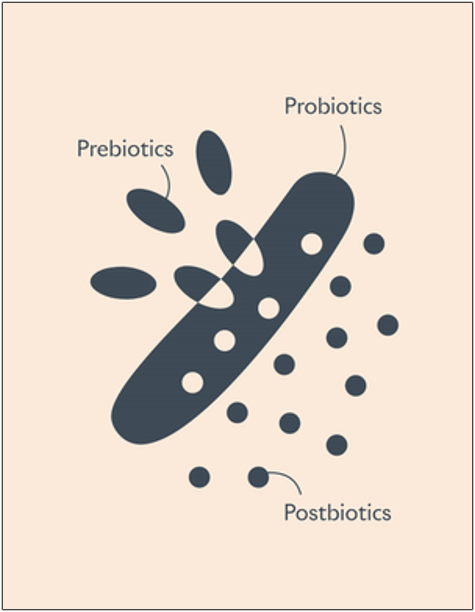
Prebiotic fibers, complex starches, polyphenols, and Prifs feed the good bacteria (probiotics) that then produce benefical postbiotics.
The gut-skin axis refers to a complex, bidirectional interaction between the gut microbiota and skin health, including skin microbiota, mediated by immunological mechanisms, short chain fatty acids, inflammatory mediators, and neuroendocrine signaling. This interplay suggests that disturbances in gut microbiota can influence skin physiology by modulating immune and inflammatory responses, and dysbiosis of the skin can interupt skin physiology and anatomy that can then negatively impact the gut. This interaction involves multiple systems, including the immune system, the autonomic nervous system, and microbial metabolites with systemic bioactivity, such as short-chain fatty acids (SCFAs), tryptophan, and serotonin derivatives, all of which contribute to cutaneous immune regulation and chronic inflammation.
Recent studies have highlighted the fundamental role of both the gut and skin microbiota in the pathogenesis of various inflammatory dermatoses. In psoriasis, for example, a notable reduction in bacteria from the phylum Actinobacteria and a corresponding increase in the phylum Firmicutes have been observed in the gut, suggesting a microbial imbalance that may at least partially underly the increased proinflammatory state in affected individuals. In the skin, dysbiosis is likewise evident, characterized by an increase in Firmicutes within psoriatic lesions. These shifts in microbial composition reflect a dysbiotic state that likely contributes to chronic inflammation and immune dysregulation (Thye et al., 2022, Nørreslet et al., 2020). Dysbiosis of the skin can interupt skin barrier function, increase inflammation – with that skin inflammation going systemic and possibly effecting the gut, and with dysbiosis of the gut, your gut produces inflammation and doesn’t produce necessary metabolites – both of which negatively affect the skin.
Therefore, supporting and nourishing your gut microbiome is important. However, recent research finds that many US citizens may not be doing this in the best way. The study, published in the journal Clinical Gastroenterology and Hepatology, found that the percentage of US citizens over age 20 using probiotic supplements more than tripled from 2009 to 2023, rising from slightly less than 2 percent of the population to roughly 7 percent. Probiotic use climbed among people under age 20 too.
These absolute numbers are relatively small, but represents a significant increase. However,during the same period, there was little or no increase in consumption of fiber-rich plants. Many studies have found that one of the simplest and most important ways to improve your gut health is by feeding your gut microbes the foods that they thrive on – fibers, starches, polyphenols, and hard to digest proteins. These include fruits, vegetables, beans, nuts, seeds and other foods that are high in fiber, complex starches and proteins that aren’t abbsorbed in the upper intestine, but instead, are hard to digest and pass through to colon where they feed bacteria that ferment them and make important metabolites that support human health.
Beneficial plant phenols, or polyphenols, act like prebiotics in your digestive tract. They feed good gut bacteria like Bifidobacterium and Lactobacillus, lower bad bacteria, reduce inflammation, and help create helpful post-biotic compounds. “Bad” phenols were produced when bacteria consumed proteins from the host, including proteins found in the mucus lining of the gut. The good phenols, in contrast, came almost entirely from plant-based indigestible proteins in the diet (Prif). Healthy metabolite profiles have been found when Prif are consumed (AbuSalim et al, 2026).
Consider someone, for example, not eating much fiber but taking an Akermansia muciniphila supplement. In these conditions of low dietary fiber and an altered gut microbiota with excessive mucin degradation by A. muciniphila, one can compromise the mucus barrier (leaky gut), increasing susceptibility to inflammation, infection, and pathogenic overgrowth. Elevated A. muciniphila levels have been associated with various diseases and medications, including graft versus host disease (GVHD) and irradiation, and shown to exacerbate infections by enteric pathogens (Tinger and Engevik, 2025).
Probiotic supplements are often marketed for gut health, but there’s little evidence that they can improve or benefit gut health in healthy people, and studies suggest that, in some cases, beyond the example of Akermansia that I pointed out, they can disrupt the composition of your gut microbiome. Humans don’t have the necessary enzymes to metabolize most of the fiber that we eat, but our gut microbes do have those enzymes. When we eat fruits and vegetables, fiber, straches, polyphenols and Prif travels through our gastrointestinal tracts largely intact until they reach the colon, where microbes feast on them. Our gut microbes convert fiber and the other prebiotics into short-chain fatty acids and other compounds that are beneficial to us. These compounds help lower inflammation, improve blood sugar levels and stimulate the production of appetite-suppressing hormones (yes, some act like GLP-1 agonists).
Some studies have found that taking probiotic supplements can reduce microbiome diversity (a key attribute of a healthy gut) and cause other unintended negative effects. In one clinical trial, scientists at Stanford University assigned adults with metabolic syndrome, a group of conditions that raise the risk of heart disease, stroke and Type 2 diabetes, to take a probiotic supplement for 18 weeks. The supplement contained several strains of bacteria thought to be good for metabolic and digestive health. The researchers found that some people showed improvements in their blood pressure and triglyceride levels, but others experienced a worsening of their blood sugar and insulin levels. People randomly taking probiotic supplements, from a highly unregulated industry, can do much more harm to their guts than what the scientists at Stanford found.
The best ways to nourish your gut microbiome
Eat a wide variety of plants: In general, studies have found that the more diverse your vegetable based diet, the more diverse your gut microbiome. The best way to diversify your diet is by eating many different types of plants. You can do that by eating different leafy greens, snacking on different fruits, adding more herbs and spices to your meals, and seeking out a variety of nuts, beans, lentils, seeds and grains. If needed, you can supplement with prebiotics, including fiber, complex starch, polyphenols, and Prif. You’ll feel better, and look better.
 Dr. Greg Maguire's Skin Care