S2RM Technology: The Power of Molecules Released From Adipose Mesenchymal Stem Cells (AMSC) – Benefits Not Just in Skin, But Brain Too

Studies at Mayo Clinic provide evidence that the molecules we use at NeoGenesis repair spinal cord injuries in human patients. Injecting AMSCs into the spinal cord of patients with traumatic spinal cord injuries yielded positive outcomes, including changes in sensory and motor scores, imaging, cerebrospinal fluid markers, and somatosensory evoked potentials. The positive results were attributed to the molecules released by the AMSCs, the same molecules used in S2RM and previously demonstrated by my lab to protect and repair neurons.

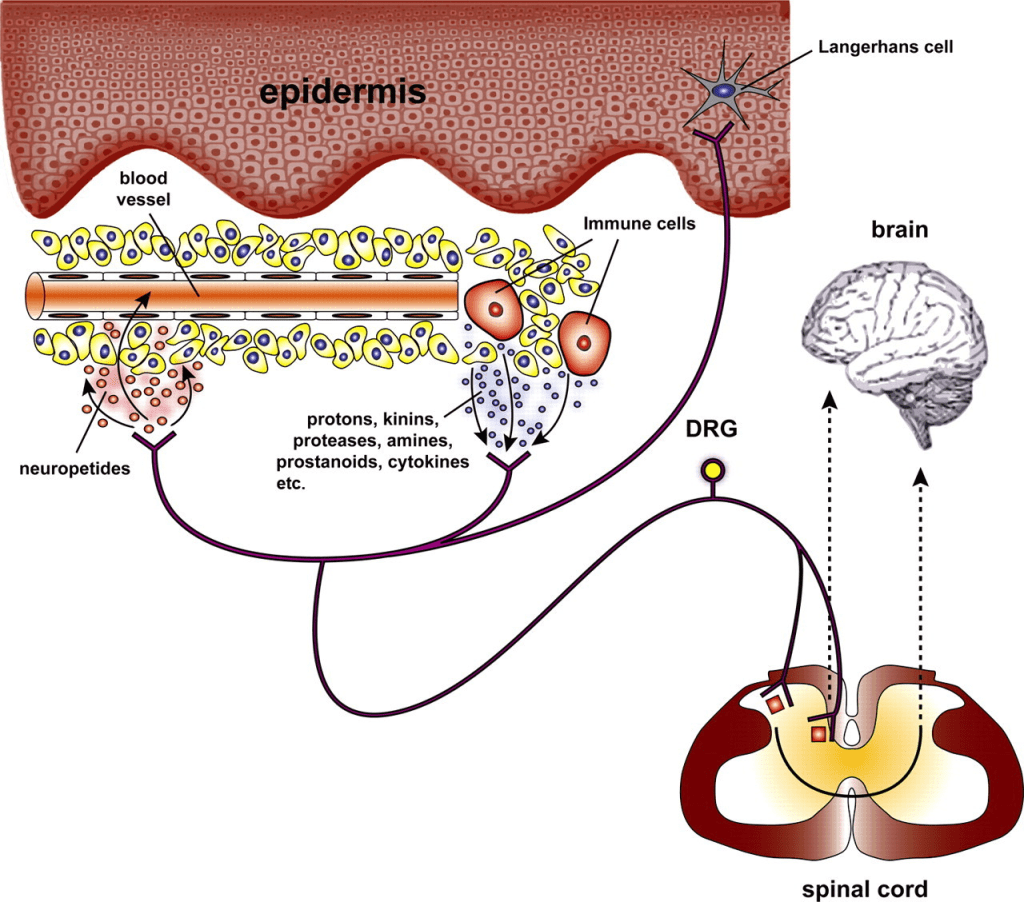
From: Roosterman et al (2006)

S2RM, based on the molecules that AMSCs and fibroblasts secrete, is a powerful and safe technology. The power of S2RM to benefit the nervous system is one of many mechanisms by which the molecules provide therapeutic actions in the skin. Why? Cutaneous neuroimmunoendocrinology is involved in several skin diseases. That’s a big word used by scientists. It means that the nervous system, the immune system, and endocrine system are all connected. The central nervous system (CNS) is directly, through efferent nerves or CNS-derived mediators, or indirectly, through the adrenal glands or immune cells, connected to skin function.

The skin is innervated by afferent (nerve fiber carrying signal from the skin to the brain) somatic nerves with fine unmyelinated (C) or myelinated (Aδ) primary afferent nerve fibers transmitting sensory stimuli (temperature changes, chemicals, inflammatory mediators, pH changes) via dorsal root ganglia and the spinal cord to specific areas of the CNS, resulting in the perception of pain, burning, burning pain, or itching. It’s a powerful system, and when function goes awry, it can drive you crazy – for example, itching and burning of the skin.

I’ll be nerdy here and explain the brain connection to the skin underlying itch (pruritis), as described by Roosterman et al (2006) in Physiological Reviews.  In pruritus, skin-derived itch-selective primary afferent fibers are connected with specific units within the lamina I of the spinal cord. Here, they form a distinct pathway projecting to the posterior part of the ventromedial thalamic nucleus (nerves projecting from spinal cord to midbrain). The pathway then projects to the dorsal insular cortex that is involved in a variety of interceptive modalities such as thermoception, visceral sensations, thirst, and hunger. As revealed by functional positron emission tomography (fPET imaging technology), induction of itch by intradermal histamine injections and histamine prick induced coactivation of the anterior cingulate cortex, supplementary motor area, and inferior parietal lobe, predominantly in the left hemisphere. This considerable coactivation of motor areas explains the common observation of itch being essentially linked to a desire to scratch. In other words, the afferent “itch signals” from the skin to the brain lead to efferent “scratch signals” from the brain to the periphery (hands).

As you can see, a functional spinal cord is needed for all of this skin-brain signaling to work. And if there is damage to any of these nervous system areas, the peripheral nervous system in the skin, the spinal cord, or the brain itself, S2RM can help to repair it! That’s part of the power of S2RM.

Molecules Released from Human Adipose Derived Mesenchymal Stem Cells and Fibroblasts Promote Epidermal Barrier Repair

The S2RM technology that I developed is based on the molecules released from skin derived adipose mesenchymal stem cells (hASCs) and fibroblasts (HNDF). This combination of many molecules has many benefits to the skin. In this blog, I focus on the benefits of these molecules in helping to repair epidermal barrier function.

A number of diseases and conditions of the skin involve epidermal barrier dysfunction. For example, eczema is a multifactorial, heterogeneous disease associated with epidermal barrier disruption and intense systemic inflammation of the skin. Our previous work has found that S2RM attenuates the symptoms of eczema, including atopic dermatitis (AD). Studies of the mechanisms of action of the molecules present in S2RM suggest that these molecules effectively restore epidermal barrier functions in AD by facilitating the synthesis of ceramides, and creating a thicker epidermis.

hASCs as well as human dermal fibroblasts (HNDF) have a positive impact on keratinocytes proliferation, stemness maintenance, and adhesiveness to membranes via paracrine involvement when co-cultured using the collagen. This means the keratinocytes, largely responsible for building the epidermal barrier, are maintained in a younger and healthier state by the stem cells (hASCs and HNDF) that are releasing molecules into the epidermis from their location in the dermis.

These functions, along with the many other functions of the hASCs and HNDF including modulating immune function into an anti-inflammatory, pro-repair state, important to all epithelial tissues, are critical to good skin health.

Skin Longevity: Mesenchymal Stem Cell Released Molecules Contain SIRT1 and Other Molecules Upregulating SIRT1 Expression

The molecules released by adipose mesenchymal stem cells (ADSC) are known to bring skin cells out of senescence, and the mechanism of action is twofold: 1. the molecules released from ADSC contain SIRT1, and 2. the molecules released from ADSC increase SIRT1 expression in target cells. These are two of the many mechanisms of action underlying the ability of NeoGenesisS2RM technology to rapidly and sustainably reverse and prevent the signs and symptoms of skin aging.

Longevity is a hot topic in the popular press, and the topic has now hit skincare. This is part of the “scientification” of skincare in the popular press that has arisen over the last few years. The trend has an upside and a downside. Learning about ingredients and how they work in the skin is important. The better informed we are, the better we can take care of our skin. The downside, is that non-scientists, including many practicing dermatologist, who have neither been trained as scientists, nor trained to analyze scientific studies, often proffer erroneous information about skin care in the popular press. For example, in my 2020 publication, in the section called “Example of Misinformation in Skin Care Marketing.” I describe how a practicing dermatologist in Miami makes many mistakes in describing skin care ingredients in her various popular press articles, including articles in a large newspaper.

Also, reading a Bloomberg article on what dermatologist think about anti-aging skin care products, I was once again shown an example of how misinformed are some practicing dermatologist. One dermatologist was saying not to use products that contain antimicrobial preservatives, but when looking at the products she has for sale on her website, guess what – many of the products she sells online contain an antimicrobial preservative. Looking at her blog, she talks a lot about using sunscreen – an important topic. But she misinforms the reader by saying that mineral sunscreens reflect light and UV. That’s incorrect because mineral sunscreens predominantly absorb the UV, not reflect it. I didn’t read anymore because I dislike misinformation – I’ll stick to reading informed articles from professors of dermatology, including scientists and physicians, who inform us based on scientific and clinical evidence.

Let’s look at what’s being said about longevity of the skin in the popular media, and have a brief look at some of the science in the scientific literature (PubMed, peer-reviewed journal articles).

Longevity in Skincare

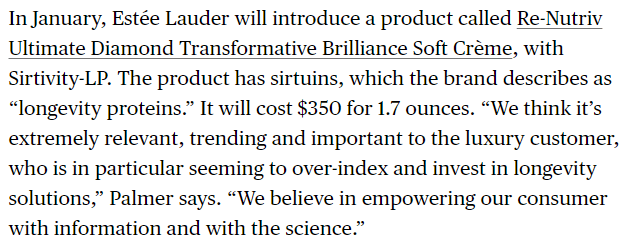
As Jeannette Neumann in Bloomberg states:

In the same article, Neumann goes on to tell us that:

Key to the new product ate sirtuins. So what are sirtuins and what do they do? Sirtuins are a family of signaling proteins involved in metabolic regulation. They are ancient proteins in animal evolution and appear to possess a highly conserved molecular structure throughout all kingdoms of life. They are everywhere in lifeforms. And guess what the scientific evidence suggests: NeoGenesis not only has SIRT1 activators in our S2RM technology, but we also have the SIRT1 protein itself. We’ve had S2RM on the market for over 13 years as a topical product. It’s one of the reasons our products work so well.

Here’s a little more on sirtuins and how they’re activated. SIRT1 is a cellular defense protein that ensures survival by controlling metabolism when there is not enough energy supply to cells. SIRT1 is an important molecule in the control of redox states, apoptosis, and a number of life-extending mechanisms. By changing SIRT1 expression, a number of substances and factors can control the level of SIRT1 protein. Naturally occurring molecules that increase SIRT1 expression include, resveratrol, quercetin, fisetin, curcumin, and berberine. SIRT1 protein expression declines as a we age, and SIRT1 expression decreases with age in mice. SIRT1 has been referred to as a longevity-associated protein that could be used as a potential therapeutic target for extending human healthspan, and it is currently under investigation in the battle against cognitive decline, neurodegenerative diseases, and aging. SIRT1 has been reported to negatively regulate the expression of a number of inflammatory senescence-associated secretory phenotype (SASP) factors, including the SASP factor. SIRT1 produces neuronal protection in neurodegenerative disorders and memory impairment, and is crucial for synaptic plasticity and memory retention in neurons. Numerous studies have shown that p53 and p21 have a role in the control of the cell cycle, DNA repair, apoptosis, and other critical biological processes. Cell cycle arrest results from the activation of p53 and p21, which are responsible for replicative and stress-related senescence in cells. SIRT1 acts on p53 by deacetylating it, which negatively regulates p53’s transcriptional activity, essentially suppressing its function as a tumor suppressor and inhibiting apoptosis induced by stress or DNA damage. In other words, SIRT1 “dampens down” the activity of p53 by removing acetyl groups from it. 

Senescent cells release a range of inflammatory proteins, such as SASP, which causes low-grade chronic inflammation and accelerates senescence. Loss of the key anti-aging molecule SIRT1 may be important for accelerating aging. Zhang et al (2023) found that aged mice displayed upregulation of senescence-related signals such p53 and p21 and downregulation of SIRT1 in the hippocampus. These abnormalities were reversed by the molecules released from mesenchymal stem cells (MSCs).

In our skin, fibroblasts are long-lived cells that are subject to much damage over the years. They can become senescent and pro-inflammatory. Studies have found that SIRT1 can protect human fibroblasts from senescence by promoting telomerase reverse transcriptase transcription (Yamashita et al, 2012). Further, Yuan et al (2012) found that SIRT1 improved the senescence of young MSCs during in vitro subculturing. In other words, SIRT1 protects young cells from stressors, such as oxidative stress, and keeps them healthy and from becoming pro-inflammatory senescent cell types.

As you can see from these studies, it’s not just about anti-aging, it’s about promoting longevity in the first place. We do both at NeoGenesis with our S2RM technology.

Skin Cell Renewal and Collagen Production Without Injury

Wounding from procedures induces cellular replication, and replication may drive changes in cells and could push them toward a more tumorigenic state. “Tumors are wounds that don’t heal.”

Tissue specific stem and progenitor cells, such as the skin’s mesenchymal stem cells, fibroblasts, and keratinocytes, can persist during the lifetime or for extended periods of time in humans and contribute to both renewal and repair by giving rise to pools of progenitor cells that persist for various periods of time, replenish differentiated, i.e. mature cells, release many types of molecules involved in healing, and make short-term contribution to wound healing. Normally, these cell’s processes maintain and heal our skin throughout life. However, due to poor lifestyle, such as a diet that overfeeds us but under nourishes us, the nutrients needed to maintain proper function in these cells are lacking. Too much sun, leave-on products that are pro-inflammatory, and environmental exposures are other examples of lifestyle factors diminishing skin function. While hereditary and genetic factors may play a role, their contribution is minimal to developing diseases. Along with intrinsic aging, where our cells go through “wear and tear” to maintain themselves regardless of other impinging factors, what we do in life, i.e. our exposome is by far the most significant factor in maintaining health, including our skin health. Again, our exposome as a consequence of what we do in life, is the largest factor in our skin’s health. For example, if you don’t exercise, then the body won’t produce a normal complement of antioxidants. And, if you don’t eat a sufficient supply of fruits and vegetables, antioxidants will not be carried through the blood and pumped into the skin. And if you’ve induced chronic inflammation in the skin, perhaps through the continuous use of an inflammatory product or procedure, then the antioxidants and other nutrient may not be efficiently pumped from the blood supply into the skin. Yes, inflammation can interfere with the pumps in the blood vessels that bring nutrients from the blood supply into the skin.

As I have written, numerous studies have found that providing all the necessary nutrients, without an overabundance of calories, optimizes stem cell function in the body. Eating well also optimizes the cell function in cells other than stem cells, many of which act to support stem cell function. It’s all a tightly woven system, and the key here is to understand it’s a system. All of our cells work together. For example, even inflammation in the outer layers of the skin, the epidermis, leads to inflammation throughout the body. So what you do to your skin affects your whole body. If you’re using topical products that induce inflammation in the skin, you’re inducing inflammation in the body. If you’re having a procedure, such as laser, chemical peels or microneedling, you’re inducing inflammation in the skin and therefore inflammation in the body. As I have previously written, wounding the skin through the use of these procedures, induces not only inflammation, but proliferation too. This over-driving of cell proliferation leads to cellular exhaustion. Stem cell exhaustion or dysfunction increases with age, and especially with too many wounding procedures, and impedes the normal function of multiple tissues and systems. Dr. Leonard Hayflick, Ph.D., a professor at UCSF, discovered that cultured normal human cells have limited capacity to divide, after which they become senescent and can secrete inflammatory factors, a phenomenon now known as the ‘Hayflick limit’.  Increase inflammation and/or increase proliferation, and you can drive cells towards their Hayflick Limit. That’s what too many wounding procedures can do to the skin. Further, chronic inflammation coupled with chronic proliferation of cells is a hallmark of cancer.

If you are having one of these wounding procedures, something that can induce prolonged inflammation, I recommend using a product, such as NeoGenesis Recovery, that quells inflammation. Here’s why I recommend Recovery: Stem cell released molecules from adult stem cells derived from the skin are the key ingredient in Recovery. These molecules, the so-called S2RM technology, powerfully quell inflammation and reset the immune system from one of inflammation to one of anti-inflammation and pro-repair. The results are dramatic, and inflammation is quickly reduced. And because healing is hastened, proliferation is reduced too. Too much proliferation of the cells in the skin can lead to cellular exhaustion, senescence, and aging of the tissue. So key to healthy skin, particularly while we’re aging, is to control inflammation and, importantly, control the damage to the skin. Too many procedures that wound the skin, will lead to eventual aging of the skin. Thus, one may see short term positive effects, but long term negative consequences.

So how does one induce modest amounts of cellular turnover to remediate skin problems such as lines and wrinkles, sagging, and discoloration? The key is evolutionary science. How does mother nature naturally keep the skin healthy and keep the cells turning-over at a safe rate? The key is feeding the skin: from the inside-out through diet, and from outside-in through topical application of carefully chosen products. And what you feed the skin is critical. There is no magic bullet, not one ingredient alone that will yield the desired results. Rather, the skin is a system, composed of many different elements, each element depending on its own set of needs. So to feed the skin, many different ingredients are needed. For example, Vitamin C is needed as an antioxidant and also to induce the production of collagen as well as to facilitate the post-translational modification of the collagen protein that has been produced. There are other functions of Vitamin C in the skin as well. Many other antioxidants are present in the skin, and they work synergistically. To optimize the antioxidant capacity of the skin, and not to have too much of one thing, many antioxidants need to be fed to the skin. Too much of one can have disastrous results. Consider Vitamin E. Tocopherol and its esters are some of the most well described antioxidants and they are commonly used for their ability to minimize ultraviolet damage. However, overuse of Vitamin E can inhibit glutathione-S-transferase, responsible for the removal of cytotoxic compounds related to tumorigenesis in the skin. And if too much Vitamin C is present, then oxidative oxygen radicals are formed through interactions with other molecules in the tissue. The consequences of this Vitamin C overload and the production of oxidants is yet to be adequately described.

The bottom line is to use a combination of ingredients that are natural to the skin, and not overload on a single or just a few ingredients. This is the scientifically-based strategy that I use when formulating products for NeoGenesis. I use Vitamin C in some of our products to help in the natural production of collagen turmover and to repair those collagen fibrils that will be present for years to come. Some collagen protein is called long-lived protein and will remain in the skin for decades. It can accumulate damage over the years, and one way to protect it and repair it is with the use of multiple types of antioxidants. Therefore, when I formulate products, Neogenesis offers multiple types of antioxidants that work synergistically. Sometimes people ask me, why do the Neogenesis products have different colors, and why aren’t they all white and creamy like other products on the market? The simple answer, our products have a multitude of ingredients that are important to the skin and have different colors. Think about your diet. If everything you ate was white, you die pretty quickly from malnutrition because you’re not eating all of those colorful fruits and vegetables that provide colorful nutrients to the body. All of these ingredients are necessary for the natural turnover and repair of your skin’s cells. Mother nature gives you a balance of nutrients, and that is what we do at NeoGenesis.

At Neogenesis we offer safe and natural, mostly skin-identical, ingredients that support the natural turnover of the skin’s cells. Skin identical ingredients include the S2RM that our skin’s stem cells make and ceramide and urea that are made by other cells. Skin identical ingredients also include ingredients that our bodies don’t make, but are brought into the skin through diet, including vitamin C and carrotenoids. We don’t give you a product loaded with just one ingredient at high amounts, such as EGF so that face reddens and puffs up like a water balloon, nor do we offer a lip product loaded with gobs of peppermint oil to irritate, cause an inflammatory immune reaction, and swell the lips so that everyone looks like they have Melkersson-Rosenthal syndrome. A core technology that we use at Neogenesis is our S2RM technology. As our skin ages or is compromised by poor health and poor diet, our stem cell function can decline. The molecules that we use at NeoGenesis are from stem cells in the skin that help to induce collagen production, protect collagen, and help to control the turnover of keratinocytes in the epidermis that are key to barrier formation. So what we’re doing at NeoGenesis is simply returning to the skin what was naturally present when we were young and healthy. In this way we restore natural cellular turnover and collagen production, without the adverse side effects of inflammation and over-proliferation associated with wounding procedures. And remember, if you do have a wounding procedure, be sure to use NeoGenesis Recovery before and after the procedure to minimize inflammation, normalize proliferation, and reset the innate and adaptive immune systems of the skin to a pro-healing mode. Please avoid certain stem cell products that are made with pro-inflammatory and pro-oncogenic bone marrow mesenchymal stem cell cytokines. With the use of Recovery, better results are realized from the procedure with fewer adverse side effects and less down time.