Building Dermal Matrix – Be Careful Which Matrikines You Choose.

While matrikines from damaged tissue increase inflammation, matrikines from adipose mesenchymal stem cells (ADSCs) and fibroblasts (FBs) reduce inflammation and rebuild the matrix without fibrosis.

The global aging of populations has driven a steady rise in skin pathologies — including skin cancer, inflammatory dermatoses, photoaging, and chronic wounds — imposing a growing burden on healthcare systems and quality of life (Flohr & Hay, 2021). Addressing these conditions requires not only early detection, effective therapeutic strategies tailored to the aging skin environment, but most importantly, improved prevention strategies.

Central to the pathology of most skin conditions, indeed, most tissues (Maguire, 2018), is the extracellular matrix (ECM) — a dynamic network of proteins, proteoglycans, and associated molecules that provides structural support, maintains tissue integrity, and governs cell migration, proliferation, differentiation, and survival (Bhat and Bissell, 2014; Kular et al., 2014). The ECM is maintained through continuous, protein- and tissue-specific cycles of synthesis and degradation; disruption of this homeostasis underlies both pathological conditions and the aging process itself (Iozzo & Gubbiotti, 2018Statzer et al., 2023).

Enzymatic degradation of ECM macromolecules liberates small bioactive peptides known as matrikines, which exert broad (patho)physiological effects on cell signaling, behavior, and tissue homeostasis. The term was introduced by Maquart et al. to describe peptides released by partial proteolysis of ECM components that retain the capacity to regulate cellular activity (Maquart et al., 2004). I’ve adopted the expanded definition of Gaggar and Weathington, which requires matrikines to satisfy three criteria: (1) they are derived from larger ECM macromolecules; (2) they are generated by enzymatic, chemical, or other cleavage — and can therefore be produced ex vivo and introduced therapeutically; and (3) they display intrinsic bioactivity on cells or cellular receptors, independent of the properties of their parent molecule (Gaggar & Weathington, 2016).

In skin, matrikines have been identified across a range of pathological contexts, including melanoma, wound healing, inflammatory disease, and aging (Jariwala et al., 2022Sivaraman & Shanthi, 2018). Their therapeutic potential is substantial: matrikines have been shown to accelerate wound closure by promoting cell migration and ECM deposition, attenuate inflammation through modulation of cytokine production, and counter skin aging by stimulating collagen synthesis. However, during chronic injury, uncontrolled release of matrikines can drive fibrotic cascades by activating fibroblasts and triggering the abnormal deposition of collagen, worsening tissue scarring. Cutaneous matrikines as produced in damaged skin is a complex process, encompassing their ECM precursors, pharmacological activities, roles in skin pathology, and prospects for therapeutic application. But overall, these matrokines produced in damage skin are, of course, damage signals. As such, they differ from the marix building molecules, including matrikines, released from stem cells resident in the skin. For example, the tripeptide Proline-Glycine-Proline (PGP) is a collagen-derived matrikine that has classically been described as a neutrophil chemoattractant; meaning it is an inflammatory matrikine. Conversley, the molecules released from skin derived stem cells contained in NeoGnesis S2RM, are anti-inflammatory (Maguire et al, 2026). 

Matrikines produced from the proteins released from stem cells is a developmental process, not a damage signaling process. These molecules, including matrikines or their precursors (such as procollagen), released from skin stem cells are anti-inflammatory, which is unlike the matrikines produced in damaged skin.

A buzz has been created for matrikines in skincare, but remember, matrikines produced by damaged matrix in the skin are on the whole pro-inflammatory. However, the secretome from ADSCs and FBs, as used in NeoGenesis’ S2RM technology, has been found to be anti-inflammatory and does so by containing a plethora of proteins and microproteins, all of which contain mutliple peptide sequences, including matrikines. Rebuilding the skin’s matrix is critical to skin health, and the best products on the market to help rebuild the matrix and reduce fibrosis are those that contain the S2RM – Recovery, Skin Serum, and Booster from NeoGenesis. Using NeoGenesis’ S2RM-based products can prevent inflammation and scarring that occurs as the skin ages and is bombarded by inflammatory damage-associated matrikines, promoting skin longevity.
Today Most Are Not Just Interested in Adding Years to Life, But Also Focused on Adding Life to Years. Skincare Adds to Both.

Adding life to years is a paradigm shift that has given rise to a new concept: healthspan — Increasing the length of time a person can live in good health, with physical, cognitive, emotional resilience, and a feeling of well being. As the largest organ in the body, and in bidirectional communication with the whole body, skin health not only reflects systemic healthspan, but is partially causative in systemic healthspan.

Research into exceptional longevity has revealed a critical insight: Healthy aging is not defined by preserving a “young” phenotype, but by sustaining stable, resilient, and well‑adapted cells and tissues over time.Recent data and new conceptualizations have fundamentally reframed how we think about both aging and intervention. In this paradigm shift, healthspan is not simply about preserving youth, rather it is about supporting healthy biological adaptation over time. Therefore, instead of “anti-aging,” the new rubric is “longevity.” For decades, the concept of longevity was commonly framed narrowly, as “how long can we live?” Now, that question feels incomplete and not aligned with how people experience aging. Healthy aging is no longer about reacting
to decline, rather sustaining healthspan during an increased lifespan is what we now consider.

Considering the skin, this means using products with efficacy, not just coverups and quick fixes. Many products will use ingredients that fill lines and wrinkles and use minerals to even the skin tone, neither of which impart health to the skin – they’re just coverups. Other products reduce lines and wrinkles for a few hours by stretching the skin and, again, impart nothing healthy to the skin. Instead, look for products that are backed by science and use proper laboratory engineering technolgies that bring health to the skin. Healthy skin is beautiful skin. Is every ingredient in the product chosen carefully? Some products will include efficacious ingredients, but then chose other ingredients that negate the efficacy of that carefully chosen ingredient. Case in point – how many times have I seen what could have been a good product given efficacious ingredients, but they negate the positive by using ingredients like phenoxyethanol.

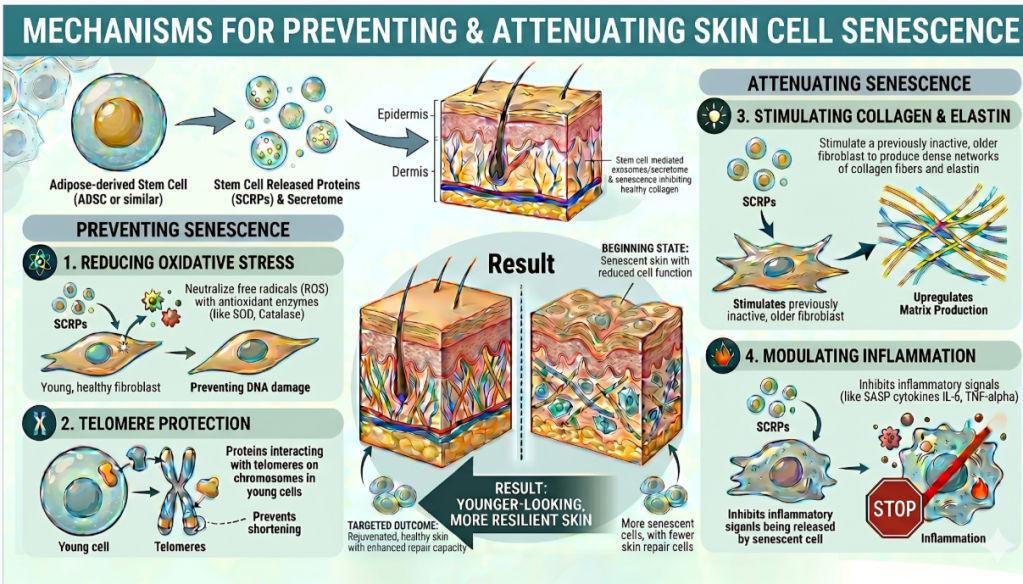
Preventing and attenuating cellular senescence (senomorphics) is now a key consideration in scientific study, and indeed, in skin care. But science takes a back seat on the internet. Instead of science, the “clipping economy” has become the backbone of the entire internet. Cheaper than traditional advertising, and often spewing fake science, people and companies employ bots and paid users to generate fake hype for everything from government to supplements to skin care. The internet has become so saturated with this fakery that now almost everyone has to do it to compete. But I don’t. My blog is not glossy and full of fakery, rather it’s didactic. That’s why professionals in the skin care industry reach out to me for my expertise.While not using clickbait and hype means my viewership is low, but what I deliver to the reader is high quality and based on evidence and rational thought. Whether it’s using my patented S2RM technology for skincare or nervous system repair, our technology at NeoGenesis is a paradigm shift in healthspan technologies.

Some of the mechanisms by which NeoGenesis Recovery helps to optimize skin longevity (Picture by Kevin Wiener of NeoGenesis).

Whether it’s the dermis and its rich extracellular matrix, barrier function, or the skin’s microbiome, all must be optimized for healthspan and lifespan. NeoGenesis features technologies that I developed in our laboratories; technologies that improve the structure and function of the dermis and its rich extracellular matrix, barrier function, and the skin’s microbiome.

As a professor of neuroscience, I give an example of bidirectional communication between skin and brain. Within the skin–brain connection, psychological stress triggers neuropeptide release from the brain that exacerbates inflammatory skin conditions such as psoriasis. Conversely, chronic skin inflammation signals back to the brain these inflammatory messages, influencing neural development and behavior.

As a consumer, if you are overwhelmed by the constant churn of product launches, look no further than the S2RM technology. I launched the technology in 2010 with BioRegenerative Sciences, and that morphed into a consumer-friendly technology at NeoGenesis in 2014. S2RM is a natural, exosome and secretome-based multifunctional product using the molecules secreted from skin stem cells. While so-called discovery of new ingredients, often only the discovery of a new way to offer marketing hype, once drove excitement in the market, now it’s creating consumer fatigue. People are choosing fewer products, products that work, gravitating toward products with clear purpose, multifunctionality and proven results. Skin minimalism is no longer a trend, it’s becoming a mindset. NeoGenesis Recovery is the ultimate in skin minimalism by using one product that contains hundreds of natural stem cell derived proteins that target hundreds of pathways simulataneously to yield long term efficacy and optimizing skin longevity.

Stay with me in my blog, I’ll have more to say about how NeoGenesis Recovery reduces skin inflammation leading to improved longevity, how Barrier Renewal Cream rebuilds barrier function to reduce inflammation and improve longevity, and MB-2 and MB-1 to restore the microbiome – a very important part of skin longevity.

Skin Intelligence

Harnessing and mimicking the skin’s innate, adaptive ability to detect, process, and respond to environmental stimuli and internal signals to maintain its optimal condition.

Science-backed efficacy and safety, sensorial experiences, and natural, skin-identical ingredients are core to NeoGenesis’ technology. Ours is a holistic approach, a systems-therapeutic (Maguire, 2014) approach to skin care, using multifunctional ingredients and products that address both physical appearance and underlying health. Healthy skin is beautiful skin. Dr. Maguire’s revolutionary approach at NeoGenesis is explained in his academic book, “Adult Stem Cell Released Molecules: A Paradigm Shift to Systems Therapeutics” (Nova Science Publishers, 2018); his popular book, Thinking and Eating For Two: The Science of Using Systems 1 and 2 Thinking to Nourish Self and Symbionts (Amazon, 2020), and has garnered interest for years by those in the skin care industry.

Aesthetic treatments have become increasingly destigmatized, as skin experts and influencers sharing these interventions online becomes the norm. These treatments once exclusive to the clinic are now reshaping expectations at home, as demand grows for powerful at-home alternatives delivering visible results – winning on time, budget, ease of use, and of course results. But this shift isn’t just about DIY. It’s about medical-like performance without the costs and negative side-effects. Ingredients mimicking the mechanisms and outcomes of aesthetic procedures are gaining traction — offering smoother, firmer, more volumized skin without a needle in sight. And with nutrition, including caloric restriction, being top of mind, consumers increasingly seek safer, accessible alternatives to GLP-1 medications that mirror or improve their benefits. The result? Skin care that goes beyond hydration, cover-up, or smoothing. NeoGenesis performs like a procedure – delivering clinic-coded results, at home. Those using GLP-1 agonists, for example, will benefit from using NeoGenesis Recovery to remediate the negative consequences of the GLP-1 agonists on the fibroblast and ADSCs in the skin.

Longevity

Longevity has emerged as a central focus in health and beauty, as consumers increasingly seek ways to biohack their bodies for long-term results. This shift from traditional anti-ageing toward a lifespan- and healthspan-driven approach focuses on biological age and prolonging skin life at the cellular and tissue levels, for example, fibroblasts and the extracellular matrix —addressing the root causes of aging. At the same time, the longevity culture strives in lifestyle changes to achieve a healthy mindset and appearance. In line with this trend, the biohacking industry is gaining momentum and can become more accessible due to the “information age.” NeoGenesis is an important part of skin “biohacking,” in the best sense of the word by bridging science, technology, and self-optimization.

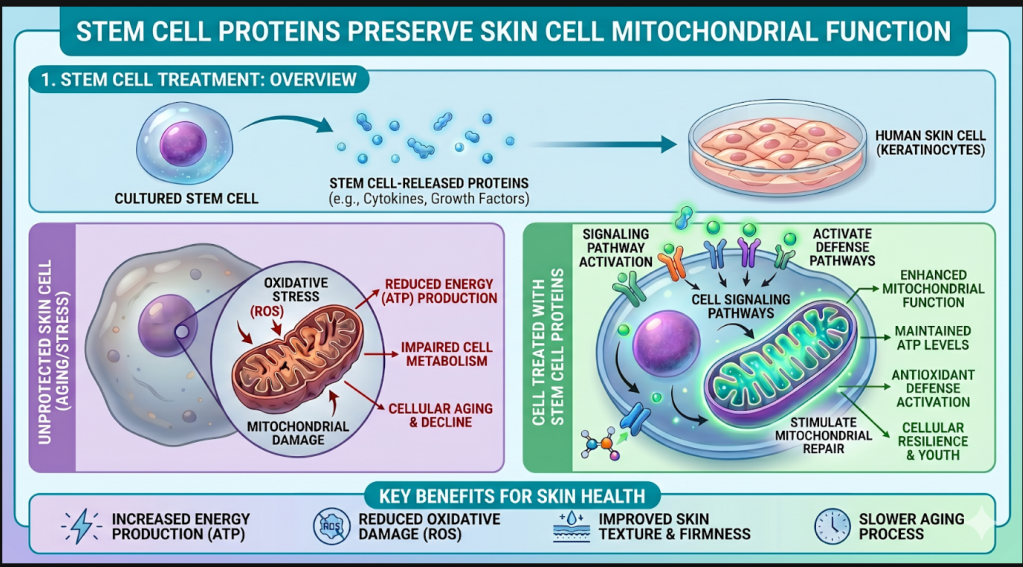
Biohacking can include stem cell released molecules (S2RM or S3RM) applied to the skin yielding renewed and optimized mitochondrial function (picture from Kevin Wiener).

Dr. Greg Maguire, Ph.D. – NeoGenesis Cofounder – Top 2% of Scientists

Dr. Greg Maguire of NeoGenesis has a long history in physiology and functional medicine (Maguire, 2013), and his methods for biohacking (Maguire, 2020) are helping to shape a new, performance-driven vision of long-term skin and body care. Whether it’s secretome and exosome technology, naturally sourced skin-identical nutrients as ingredients, or microbiome renormalization using prebiotics, probiotics, and postbiotics (Maguire and Maguire, 2017; 2019), Maguire has introduced these concepts and technologies to skin care.

Dr. Greg Maguire is one of the world’s leading scientists, having an H-index of 41. An H-index of 41 places a researcher in the top 2% of most-cited scientists globally. While precise percentiles fluctuate by field and database, this score is consistently categorized as “outstanding” and is indicative of a scholar at the highest levels of academia.

Web of Science for Dr. Greg Maguire, H-index = 41, placing Dr. Maguire in the top 2% of scientists world-wide.

NeoGenesis is pioneer in science-based dermohacking and continues to harness this disruptive vision by bridging longevity science, nature, and premium skin care experiences to push the boundaries of efficacy, safety, and sustainability. Not only efficacy, but safety is key to optimal biohacking and the NeoGenesis technologies, including our S2RM®-core technology, have extensive, peer-reviewed safety studies backing it (Maguire and Friedman, 2020).

With the technologies developed by Dr. Greg Maguire, the products formulated by Dr. Greg Maguire, Dr. Maguire’s patented S2RM technology produced by the NeoGenesis labs led by Linda Green, who has 30 years’ experience as a biotechnologist, lab-director at the University of Florida, and all of our products made in the NeoGenesis laboratories under the direction of Kevin Wiener, a science-grad from the University of California, Santa Cruz. NeoGenesis uses Just-In-Time manufacturing of our ingredients and products to bring the market the freshest, most innovative, and most powerful, efficacious products available.

Whether it’s skin-identical molecules to those produced in the skin by multiple skin stem cell types (S2RM and S3RM technology), the lipids produced in the skin (Triple Lipid Technology), or the dietary botanical-derived ingredients that are brought to the skin through the blood supply (Vibrant C Serum and Skin Restore Serum Vitamin A), NeoGenesis provides the full spectrum of ingredients needed to return the skin to a healthy state and optimize skin longevity.

References

Maguire G. (2013) Stem cell therapy without the cells. Commun Integr Biol. 6(6):e26631.

Maguire G. (2014) Systems biology approach to developing “systems therapeutics”. ACS Med Chem Lett. 2014 Mar 6;5(5):453-5

Maguire G (2018) Adult Stem Cell Released Molecules: A Paradigm Shift to Systems Therapeutics” (Nova Science Publishers, 2018).

Maguire G (2020) Thinking and Eating For Two: The Science of Using Systems 1 and 2 Thinking to Nourish Self and Symbionts. Amazon Press.

Maguire G, Friedman P. (2020) The safety of a therapeutic product composed of a combination of stem cell released molecules from adipose mesenchymal stem cells and fibroblasts. Future Sci OA. 6(7):FSO592.

Maguire M, Maguire G. (2017) The role of microbiota, and probiotics and prebiotics in skin health. Arch Dermatol Res. 309(6):411-421.

Maguire M, Maguire G. (2019) Gut dysbiosis, leaky gut, and intestinal epithelial proliferation in neurological disorders: towards the development of a new therapeutic using amino acids, prebiotics, probiotics, and postbiotics. Rev Neurosci. 30(2):179-201.

Skin Longevity: Mesenchymal Stem Cell Released Molecules Contain SIRT1 and Other Molecules Upregulating SIRT1 Expression

The molecules released by adipose mesenchymal stem cells (ADSC) are known to bring skin cells out of senescence, and the mechanism of action is twofold: 1. the molecules released from ADSC contain SIRT1, and 2. the molecules released from ADSC increase SIRT1 expression in target cells. These are two of the many mechanisms of action underlying the ability of NeoGenesisS2RM technology to rapidly and sustainably reverse and prevent the signs and symptoms of skin aging.

Longevity is a hot topic in the popular press, and the topic has now hit skincare. This is part of the “scientification” of skincare in the popular press that has arisen over the last few years. The trend has an upside and a downside. Learning about ingredients and how they work in the skin is important. The better informed we are, the better we can take care of our skin. The downside, is that non-scientists, including many practicing dermatologist, who have neither been trained as scientists, nor trained to analyze scientific studies, often proffer erroneous information about skin care in the popular press. For example, in my 2020 publication, in the section called “Example of Misinformation in Skin Care Marketing.” I describe how a practicing dermatologist in Miami makes many mistakes in describing skin care ingredients in her various popular press articles, including articles in a large newspaper.

Also, reading a Bloomberg article on what dermatologist think about anti-aging skin care products, I was once again shown an example of how misinformed are some practicing dermatologist. One dermatologist was saying not to use products that contain antimicrobial preservatives, but when looking at the products she has for sale on her website, guess what – many of the products she sells online contain an antimicrobial preservative. Looking at her blog, she talks a lot about using sunscreen – an important topic. But she misinforms the reader by saying that mineral sunscreens reflect light and UV. That’s incorrect because mineral sunscreens predominantly absorb the UV, not reflect it. I didn’t read anymore because I dislike misinformation – I’ll stick to reading informed articles from professors of dermatology, including scientists and physicians, who inform us based on scientific and clinical evidence.

Let’s look at what’s being said about longevity of the skin in the popular media, and have a brief look at some of the science in the scientific literature (PubMed, peer-reviewed journal articles).

Longevity in Skincare

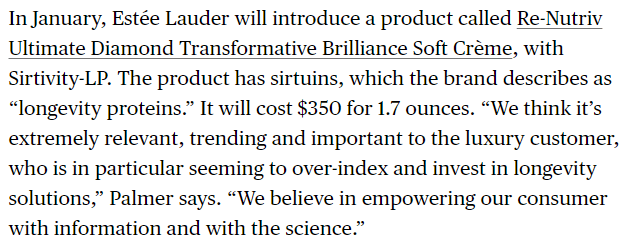
As Jeannette Neumann in Bloomberg states:

In the same article, Neumann goes on to tell us that:

Key to the new product ate sirtuins. So what are sirtuins and what do they do? Sirtuins are a family of signaling proteins involved in metabolic regulation. They are ancient proteins in animal evolution and appear to possess a highly conserved molecular structure throughout all kingdoms of life. They are everywhere in lifeforms. And guess what the scientific evidence suggests: NeoGenesis not only has SIRT1 activators in our S2RM technology, but we also have the SIRT1 protein itself. We’ve had S2RM on the market for over 13 years as a topical product. It’s one of the reasons our products work so well.

Here’s a little more on sirtuins and how they’re activated. SIRT1 is a cellular defense protein that ensures survival by controlling metabolism when there is not enough energy supply to cells. SIRT1 is an important molecule in the control of redox states, apoptosis, and a number of life-extending mechanisms. By changing SIRT1 expression, a number of substances and factors can control the level of SIRT1 protein. Naturally occurring molecules that increase SIRT1 expression include, resveratrol, quercetin, fisetin, curcumin, and berberine. SIRT1 protein expression declines as a we age, and SIRT1 expression decreases with age in mice. SIRT1 has been referred to as a longevity-associated protein that could be used as a potential therapeutic target for extending human healthspan, and it is currently under investigation in the battle against cognitive decline, neurodegenerative diseases, and aging. SIRT1 has been reported to negatively regulate the expression of a number of inflammatory senescence-associated secretory phenotype (SASP) factors, including the SASP factor. SIRT1 produces neuronal protection in neurodegenerative disorders and memory impairment, and is crucial for synaptic plasticity and memory retention in neurons. Numerous studies have shown that p53 and p21 have a role in the control of the cell cycle, DNA repair, apoptosis, and other critical biological processes. Cell cycle arrest results from the activation of p53 and p21, which are responsible for replicative and stress-related senescence in cells. SIRT1 acts on p53 by deacetylating it, which negatively regulates p53’s transcriptional activity, essentially suppressing its function as a tumor suppressor and inhibiting apoptosis induced by stress or DNA damage. In other words, SIRT1 “dampens down” the activity of p53 by removing acetyl groups from it. 

Senescent cells release a range of inflammatory proteins, such as SASP, which causes low-grade chronic inflammation and accelerates senescence. Loss of the key anti-aging molecule SIRT1 may be important for accelerating aging. Zhang et al (2023) found that aged mice displayed upregulation of senescence-related signals such p53 and p21 and downregulation of SIRT1 in the hippocampus. These abnormalities were reversed by the molecules released from mesenchymal stem cells (MSCs).

In our skin, fibroblasts are long-lived cells that are subject to much damage over the years. They can become senescent and pro-inflammatory. Studies have found that SIRT1 can protect human fibroblasts from senescence by promoting telomerase reverse transcriptase transcription (Yamashita et al, 2012). Further, Yuan et al (2012) found that SIRT1 improved the senescence of young MSCs during in vitro subculturing. In other words, SIRT1 protects young cells from stressors, such as oxidative stress, and keeps them healthy and from becoming pro-inflammatory senescent cell types.

As you can see from these studies, it’s not just about anti-aging, it’s about promoting longevity in the first place. We do both at NeoGenesis with our S2RM technology.