The S2RM technology that I developed is based on the molecules released from skin derived adipose mesenchymal stem cells (hASCs) and fibroblasts (HNDF). This combination of many molecules has many benefits to the skin. In this blog, I focus on the benefits of these molecules in helping to repair epidermal barrier function.
A number of diseases and conditions of the skin involve epidermal barrier dysfunction. For example, eczema is a multifactorial, heterogeneous disease associated with epidermal barrier disruption and intense systemic inflammation of the skin. Our previous work has found that S2RM attenuates the symptoms of eczema, including atopic dermatitis (AD). Studies of the mechanisms of action of the molecules present in S2RM suggest that these molecules effectively restore epidermal barrier functions in AD by facilitating the synthesis of ceramides, and creating a thicker epidermis.
hASCs as well as human dermal fibroblasts (HNDF) have a positive impact on keratinocytes proliferation, stemness maintenance, and adhesiveness to membranes via paracrine involvement when co-cultured using the collagen. This means the keratinocytes, largely responsible for building the epidermal barrier, are maintained in a younger and healthier state by the stem cells (hASCs and HNDF) that are releasing molecules into the epidermis from their location in the dermis.
These functions, along with the many other functions of the hASCs and HNDF including modulating immune function into an anti-inflammatory, pro-repair state, important to all epithelial tissues, are critical to good skin health.
Hair, skin, and nails (HSN) supplements are increasingly purchased despite limited evidence they work and evidence they are harmful, and suffer from lack of regulatory oversight. Stop substituting expensive, harmful supplements for a healthy whole plant-forward diet. And remember, collagen supplements don’t contain collagen, they contain amino acids and peptides (protein fragments).
Supplements marketed for skin, hair, and nail benefits, often called “dermatology” or “beauty” supplements, are increasingly being sold by unscrupulous and/or ignorant salespeople , with the global beauty supplement market expected to reach $7 billion by 2024 (Sanchez et al, 2020). So much money can be made selling these unregulated products that practicing physicians are stepping into this industry in large numbers. It’s a booming business where a supplement manufacturer makes a supplement, then recruits a physician to sell it – and then the marketing claim is made that the supplement is “doctor formulated.” It’s called a physician “side-gig” Despite the narrative that physicians are overworked, at least 40% of them have a side-gig in addition to their physician practice. What better way to make money than to stick your name on a bottle of supplements. Just ask Dr. Oz.
No U.S. Food and Drug Administration (FDA) approval or registration is required to produce and market a dietary supplement. There is no need for manufacturers to provide proof of safety or efficacy to sell these products. Since no approval is required, like other foods, there is no centralized database of currently available dietary supplements. While it’s hard to immediately harm yourself when eating natural foods, there is no restriction on concentrated doses of vitamins, minerals, and other ingredients that may be eaten, even for nutrients with defined tolerable upper limits (ULs). For example, high levels of vitamin B12 may cause lung cancer (Fanidi et al, 2019), and high levels of Vitamin B1 have been correlated with breast cancer (Tan et al, 2023). Many of these supplements contain iron, and common adverse effects of iron overdose are constipation, gastrointestinal upset, reduced zinc uptake, and iron overload in acquired hemochromatosis (iron can build in the skin and darken and damage it). Zinc toxicity is another problem with many attendant problems including poor cholesterol regulation. I could go on, but you get the idea.
There’s another problem too, of which many, consumers, physicians, and manufacturers alike, are unaware. Biotin (vitamin B7) is widely used in “nail” and “hair” supplements that the FDA has warned may cause interactions between biotin and certain laboratory tests, including those that test for cardiac function and thyroid function. There are numerous reports of biotin interference with laboratory testing, specifically with thyroid function tests. Most commonly, biotin use can result in falsely high levels of T4 and T3, and falsely low levels of TSH, leading to either a wrong diagnosis of hyperthyroidism or that the thyroid hormone dose is too high. Not interfering with such testing is important because thyroid hormone (T3 and T4) affects every cell and all the organs in your body.
Considering collagen, it can be extracted from fish, pig and cattle skin, but wildly popular is the “bovine” variety. Interesting, Type II collagen from animals is used to induce inflammation and arthritis in animal studies – too much collagen is not good – think scleroderma. In this bovine collagen craze lies a veiled industry driving the destruction of tropical forests and fueling violence and human rights abuses in the Brazilian Amazon. When found out, according to the Bureau of Investigative Journalism, Vital Proteins, a major supplier of bovine “collagen,” said it would “end sourcing from the Amazon region effective immediately.” I ponder. Remember, it’s not collagen, rather the processed, hydrolyzed components of collagen, mainly some amino acids and peptides, is what the product really is. And those peptides will be broken down to amino acids in the gut, including by the gut’s enterocytes. As for fish “collagen,” many reports of reactions, including anaphylaxis, have been reported. Bovine “collagen” too.
Jennifer Aniston is the chief creative officer of Vital Proteins, a leading collagen brand owned by Nestléthat has been deforesting the Amazon.
For those who would like to know, otherwise you can skip this paragraph, here’s how hydrolyzed collagen is made according to Lopez et al (2019).. Denaturation of native collagen produces three α chains in their random coiled form. It can be observed by thermal treatment of collagen above 40 °C. Once the chains are separated, the hydrolysis is carried out by the action of proteolytic enzymes (alcalase, papain, pepsin, and others). The resulting product is commonly called hydrolyzed collagen (HC). It is composed of small peptides with low molecular weight 3–6 KDa. Its solubility and functional activity (antioxidant, antimicrobial) are related to the type and degree of hydrolysis as well as the type of enzyme used in the process. Another type of hydrolysis is by use of chemical products in acidic (acetic acid, hydrochloric acid, and phosphoric acid) or alkaline media. These two types of extraction are strongly corrosive and produce a high salt concentration in the final product after neutralization. Alternative methods of extraction consist in thermal treatment or applying high temperature and pressure to the protein. It includes subcritical water level (SCW) that exists at a temperature between 100 and 374 °C and a pressure of less than 22 MPa. More environmentally unfriendly steps in the production of “collagen” supplements.
You may have heard about a published, systematic review of clinical trials on oral collagen supplements. Like many studies of this type, the study claims their results support that ingesting hydrolyzed collagen can reduce skin wrinkles and improve elasticity and skin hydration. If you’ve read my papers, you know to ask an important question, “compared to what?”
This study was of taking oral hydrolyzed collagen and comparing it to doing nothing. Eat a lousy diet, take a supplement, and see some benefit. That’s what the study found. In other words, taking a supplement was compared to eating a lousy diet. Try this instead. 1. Eat a healthy diet versus a lousy diet and see what happens, and 2. compare that to the take a supplement with a lousy diet versus eat a lousy diet. Which one is better? Probably number one. Because taking a supplement only provides part of what a good diet provides.
Eat vegetables to provide all the nutrient your body needs to grow healthy hair.
Eating a combination of plant foods that can help with this include:
Formaldehyde-releasing ingredients in cosmetics can change our epigenetics and increase our chances of cancer
In personal care products, formaldehyde can be added directly, but most often, it can be released from preservatives such as quaternium-15, DMDM hydantoin, imidazolidinyl urea, diazolidinyl urea, polyoxymethylene urea, sodium hydroxymethylglycinate, bromopol and glyoxal. Why are these ingredients so bad? For a number of reasons, including that they’re cancer causing.
Here I’ll discuss how these ingredients can cause cancer. Let’s think about epigenetics. Epigenetics involves chemical processes (including proteins produced by our bodies) that regulate gene activity, not by changing the DNA structure, rather by regulating the expression of mRNA from our genes. This enables our cells, tissues, and organs to adapt to environmental changes. However, this plastic and adaptive benefit has a downside because epigenetic regulation is more susceptible to disruption by toxins than the relatively stable genetic sequence of DNA.
A new study led Prof. Dr. christopher Chang, Ph.D. at UC Berkeley, demonstrates that formaldehyde, commonly present in various household and cosmetic products, in polluted air, and widely used in building materials such as particleboard, plywood, and other pressed-wood products is a powerful modifier of normal epigenetic patterns. Formaldehyde has been associated with an increased risk of developing cancer, such as nasopharyngeal tumors and leukemia.
Mechanistically, Dr. Chang’s study discovered that formaldehyde is an inhibitor of the MAT1A protein, the main producer of S-Adenosyl-L-Methionine (SAM), which is the universal donor of the chemical group “methyl” that regulates epigenetic activity. Specifically, the scientists found that exposure to formaldehyde induced a reduction in SAM content and caused the loss of methylation of histone proteins, that package our DNA and control the function of thousands of genes.
In summary, these scientists have discovered that formaldehyde has the capacity to modify the epigenetic properties of our cells, contributing to the well-documented carcinogenic properties of formaldehyde. Check the ingredient label of your personal care products to be sure they don’t contain these formaldehyde-releasing ingredients. BTW, people often confuse “urea” for “imidazolidinyl urea, diazolidinyl urea, or polyoxymethylene urea,” all of which can release formaldehyde because they are reaction products of urea and formaldehyde. Products labeled with “Urea” are not formaldehyde-releasing because the “urea” has not been reacted with formaldehyde. “Urea” is naturally occurring in the skin and other areas of the body, and is a natural moisturizing factor (NMF) that is essential for the adequate hydration and integrity of the stratum corneum.
The molecules released by adipose mesenchymal stem cells (ADSC) are known to bring skin cells out of senescence, and the mechanism of action is twofold: 1. the molecules released from ADSC contain SIRT1, and 2. the molecules released from ADSC increase SIRT1 expression in target cells. These are two of the many mechanisms of action underlying the ability of NeoGenesis‘ S2RM technology to rapidly and sustainably reverse and prevent the signs and symptoms of skin aging.
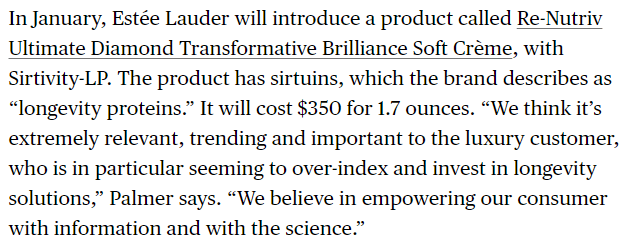
Longevity is a hot topic in the popular press, and the topic has now hit skincare. This is part of the “scientification” of skincare in the popular press that has arisen over the last few years. The trend has an upside and a downside. Learning about ingredients and how they work in the skin is important. The better informed we are, the better we can take care of our skin. The downside, is that non-scientists, including many practicing dermatologist, who have neither been trained as scientists, nor trained to analyze scientific studies, often proffer erroneous information about skin care in the popular press. For example, in my 2020 publication, in the section called “Example of Misinformation in Skin Care Marketing.” I describe how a practicing dermatologist in Miami makes many mistakes in describing skin care ingredients in her various popular press articles, including articles in a large newspaper.
Also, reading a Bloomberg article on what dermatologist think about anti-aging skin care products, I was once again shown an example of how misinformed are some practicing dermatologist. One dermatologist was saying not to use products that contain antimicrobial preservatives, but when looking at the products she has for sale on her website, guess what – many of the products she sells online contain an antimicrobial preservative. Looking at her blog, she talks a lot about using sunscreen – an important topic. But she misinforms the reader by saying that mineral sunscreens reflect light and UV. That’s incorrect because mineral sunscreens predominantly absorb the UV, not reflect it. I didn’t read anymore because I dislike misinformation – I’ll stick to reading informed articles from professors of dermatology, including scientists and physicians, who inform us based on scientific and clinical evidence.
Let’s look at what’s being said about longevity of the skin in the popular media, and have a brief look at some of the science in the scientific literature (PubMed, peer-reviewed journal articles).
Longevity in Skincare
As Jeannette Neumann in Bloomberg states:
In the same article, Neumann goes on to tell us that:
Key to the new product ate sirtuins. So what are sirtuins and what do they do? Sirtuins are a family of signaling proteins involved in metabolic regulation. They are ancient proteins in animal evolution and appear to possess a highly conserved molecular structure throughout all kingdoms of life. They are everywhere in lifeforms. And guess what the scientific evidence suggests: NeoGenesis not only has SIRT1 activators in our S2RM technology, but we also have the SIRT1 protein itself. We’ve had S2RM on the market for over 13 years as a topical product. It’s one of the reasons our products work so well.
Here’s a little more on sirtuins and how they’re activated. SIRT1 is a cellular defense protein that ensures survival by controlling metabolism when there is not enough energy supply to cells. SIRT1 is an important molecule in the control of redox states, apoptosis, and a number of life-extending mechanisms. By changing SIRT1 expression, a number of substances and factors can control the level of SIRT1 protein. Naturally occurring molecules that increase SIRT1 expression include, resveratrol, quercetin, fisetin, curcumin, and berberine. SIRT1 protein expression declines as a we age, and SIRT1 expression decreases with age in mice. SIRT1 has been referred to as a longevity-associated protein that could be used as a potential therapeutic target for extending human healthspan, and it is currently under investigation in the battle against cognitive decline, neurodegenerative diseases, and aging. SIRT1 has been reported to negatively regulate the expression of a number of inflammatory senescence-associated secretory phenotype (SASP) factors, including the SASP factor. SIRT1 produces neuronal protection in neurodegenerative disorders and memory impairment, and is crucial for synaptic plasticity and memory retention in neurons. Numerous studies have shown that p53 and p21 have a role in the control of the cell cycle, DNA repair, apoptosis, and other critical biological processes. Cell cycle arrest results from the activation of p53 and p21, which are responsible for replicative and stress-related senescence in cells. SIRT1 acts on p53 by deacetylating it, which negatively regulates p53’s transcriptional activity, essentially suppressing its function as a tumor suppressor and inhibiting apoptosis induced by stress or DNA damage. In other words, SIRT1 “dampens down” the activity of p53 by removing acetyl groups from it.
Senescent cells release a range of inflammatory proteins, such as SASP, which causes low-grade chronic inflammation and accelerates senescence. Loss of the key anti-aging molecule SIRT1 may be important for accelerating aging. Zhang et al (2023) found that aged mice displayed upregulation of senescence-related signals such p53 and p21 and downregulation of SIRT1 in the hippocampus. These abnormalities were reversed by the molecules released from mesenchymal stem cells (MSCs).
In our skin, fibroblasts are long-lived cells that are subject to much damage over the years. They can become senescent and pro-inflammatory. Studies have found that SIRT1 can protect human fibroblasts from senescence by promoting telomerase reverse transcriptase transcription (Yamashita et al, 2012). Further, Yuan et al (2012) found that SIRT1 improved the senescence of young MSCs during in vitro subculturing. In other words, SIRT1 protects young cells from stressors, such as oxidative stress, and keeps them healthy and from becoming pro-inflammatory senescent cell types.
As you can see from these studies, it’s not just about anti-aging, it’s about promoting longevity in the first place. We do both at NeoGenesis with our S2RM technology.
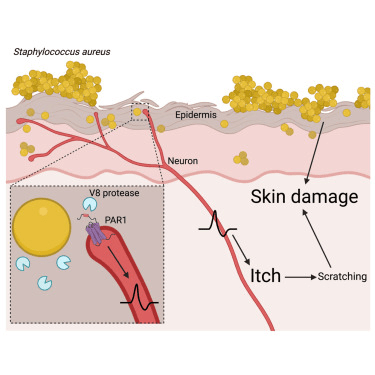
The skin barrier in the epidermis is constantly exposed to microbes and their products. The role of microbes in itch generation was previously unstudied. Deng et al (2023) find that Staphylococcus aureus, a bacterial pathogen associated with itchy skin diseases, directly activates pruriceptor sensory neurons to drive itch.
When the scientists injected MRSA, a type of S. aureus, under the skin of mice, as expected, the mice itched so much that they damaged their skin. But the authors claim to have measured no inflammation associated with the injection. This provides evidence that inflammation is not required for itch to occur.
Instead, research has found that when S. aureus invades the skin, it releases 10 different enzymes, or proteases. One of them, called V8, binds to a protein on nerve cells called proteinase-activated receptor 1, or PAR1. Activation of PAR1 likely starts a chain reaction from the skin neurons, to the spinal cord, and to the brain, which then triggers the urge to itch. In the mouse model used by Deng et al, the itching stopped when researchers used Vorapaxar, a drug that blocks the PAR1 receptor. This may not be the only mechanism by which itching occurs, but this is an important new discovery and gives us much insight into the some of the mechanisms underlying pruritis.
From Deng et al (2023)
As Ogonowska et al (2023) have described, Staphylococcus aureus massively colonizes the skin of patients with atopic dermatitis (AD), and the frequency of detection of multidrug-resistant S. aureus (MRSA) in AD patients is higher than the healthy population, which makes treatment much more difficult.
There’s hope though, and that hope involves using simple, topically applied symbiotic bacteria that are safe and natural to the skin. One set of bacteria are the nitrifying bacteria (Nitrosomonas, Nitrospira, and Nitrobacter), used in NeoGenesis MB-1. The MB-1 product has been on the market since 2015 and is multifunctional – benefiting a number of skin conditions, including acne. As one mechanism of action, Maguire and McGee (2023) hypothesize the MB-1 acts to destroy pro-inflammatory bacteriophage (viruses) associated with acne through a natural CRISPR mechanism in the probiotic bacteria.
These type of nitrifying bacteria in MB-1 have also been found to reduce pruritis and inflammation in humans with atopic dermatitis. Additionally, NeoGenesis is currently testing our second probiotic product that incorporates Bacillus subtilis and Lactobacilli. The bacterium B. subtilis has been found to reduce the S. aureus when topically applied, and Lactobacilli have been found to do the same while reducing the symptoms of AD.
NeoGenesis will have two probiotic products that will be used together in a topical application to renormalize the skin’s microbiome in AD, reduce pruritis, and restore barrier function. Stay tuned.
In a recent trial (Gupta et al, 2023), the blood pressure–lowering effect of dietary sodium reduction was comparable with a commonly used first-line antihypertensive medication. Salt in the diet is associated with chronic kidney disease. Sodium also accumulates in the skin, inducing inflammation and eczema, so feel better and look better by cutting the sodium intake that is way too high in most people.
Many factors can influence health, including that of the skin. I’ll discuss salt here, but other factors such as dairy play a big role too – both for cardiovascular health, and skin health. For example, the induction of antibodies (IgE) by the consumption of dairy can lead to cardiovascular disease and death. And dairy, loaded with antigens such as lactose, whey, and casein (even found in mothers milk because of dairy consumption by mom) can be destructive to the skin, even causing cancer.
As Gupta et al (2023) discovered, dietary sodium reduction significantly lowered blood pressure (BP) in the majority of middle-aged to elderly adults they studied. The decline in BP of those who went from a high- to low-sodium diet was independent of hypertension status and antihypertensive medication use, and was consistent across subgroups. Needless to say, reducing sodium intake did not result in adverse events.
Sodium is an essential mineral and osmolyte for the human body. It is the major cation in the extracellular fluid and as such plays a crucial role in homeostatic processes such as regulation of blood volume, osmolarity, and blood pressure. Therefore, sodium plasma concentration is maintained within a relatively narrow range of around 140 mmol/l. The sodium concentration in the interstitial space (the space in between our cells) can be much higher. We consume just the right amount of sodium when we eat a plant based diet without added sodium. If we eat too much sodium, that excessive salt intake may induce several adverse effects, causing microvascular endothelial inflammation, anatomical remodeling, and functional abnormalities, even in normotensive subjects (those with normal blood pressure). More recent studies have shown that changes in sodium plasma levels not only exert their effects on small resistance arteries, but may also affect the function and structure of large elastic arteries. The issue of salt-sensitivity, which refers to individual susceptibility in terms of BP variations following changes in dietary salt intake, has also been recently debated in its pathophysiological mechanisms and clinical implications.
Excess sodium is also stored in the skin. In the skin microenvironment, higher sodium concentrations enhance macrophage function, potentially leading to innate immune system-based inflammation. Several studies have provided significant evidence that an elevated sodium concentration has an immunomodulating effect by augmenting proinflammatory and antimicrobial macrophage function as well as T-cell activation. And now we know that sodium has accumulated to high levels in the skin of psoriasis patients (Maifeld et al, 2021). Psoriasis is an inflammatory skin condition, and restricting salt in your diet will help to reduce that inflammation. Same for eczema. Reduce the salt because, for one factor, salt promotes the growth of a bad bacteria called staph aureus which is found in patients who have bad flare ups of eczema. With high salt, the skin is unable to repair itself – it’s in a constant state of inflammation.
Cut the salt and your immune system will operate more normally. It requires time to adjust your taste to the low sodium diet – most of us are addicted to salt. But in time, you lose the addiction, and actually begin to better taste all of the other flavors in your food that were masked by the salt. Bon appetite, Pas de sel!
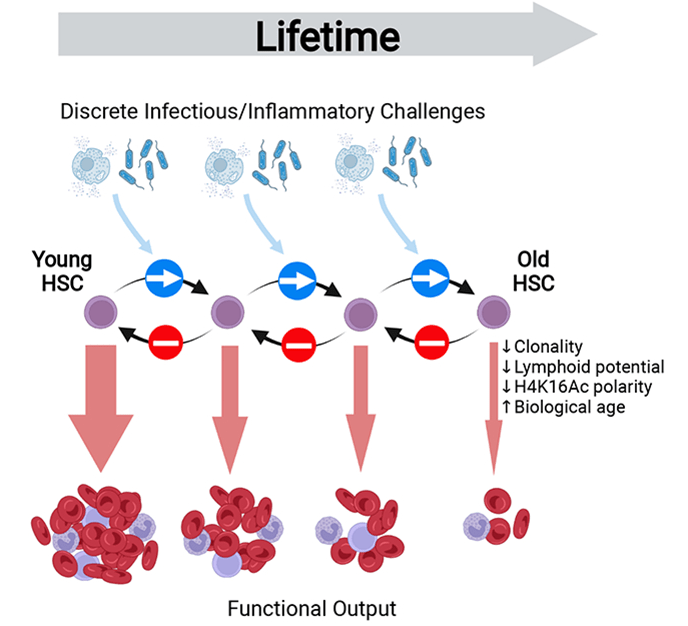
Early and mid-life inflammation ia a mediator of lifelong defects in tissue maintenance and regeneration due to the inflammation aging the stem cells.Inflammation damages the extracellular matrix, DNA, and epigenetic mechanisms, all of which contribute to aging and age-related diseases.
A schematic of stem cell inflammaging (from Bogeska et al, 2022)
Inflammaging, defined as an age-related increase in the levels of pro-inflammatory markers in blood and tissues, is a strong risk factor for multiple diseases that are highly prevalent, and frequent causes of disabilities in elderly individuals but are pathophysiologically uncorrelated, i.e., everything from cancer, to skin diseases, to heart disease, and neurodegeneration. And remember, as I’ve discussed in previous blogs, inflammation in the skin can can lead to systemic inflammation.
Inflammation can wreak havoc on the body, including the skin, through a number of key mechanisms. Let’s have a look at how inflammation can damage tissue, such as by degrading the extracellular matrix, and can damage cells at the molecular level through genetic and epigenetic mechanisms. Genetic refers to how damage occurs to the DNA, and epigenetic refers to how damage occurs “above” the DNA, such as the mechanisms that control the expression of DNA – i.e., affecting how the DNA makes RNA and proteins. Inflammation can also cause misfolding in proteins, resulting in a number of dysfunctional pathways in the body, including the control of epigenetics such as protein-based epigenetics. You read that right – proteins can be inherited and dysfunctional proteins in an adult can be inherited as dysfunctional proteins in the offspring. That’s one reason why genetics and heredity don’t mean the same thing.
Inflammaging is a process induced by chronic inflammatory cytokine signaling that promotes accelerated damage to the extracellular matrix (ECM), stem-cell aging, and precancer stem-cell generation. Multiple different sterile and infection-associated inflammatory stimuli have been shown to provoke primitive stem cells (HSCs) to exit their long-term quiescent state and enter into active proliferation. In other words, inflammation, whether it is sterile inflammation or infection-related inflammation, drives stem cells into a state where they multiply. Therefore, chronic inflammation will induce the constant multiplication of stem cells. And every time a cell multiplies itself, mutations and consequent aging processes will occur. As I’ve said before, one of the most dangerous things a cell can do is to multiply itself.
As scientists have recently published, their work demonstrates that inflammatory stimuli can provoke a long-lasting inhibitory effect on tissue regeneration that extends far beyond the duration of the original inflammatory event, via the progressive and irreversible attrition of the functional stem cell pool. They argue that prophylactic anti-inflammatory interventions may effectively delay or prevent the evolution of age-associated pathologies, but that such treatments may hold limited capacity to rejuvenate an already aged stem cell system.
In other words, it is important to reduce inflammation even during our younger years, not just during our aged period, in order to reduce stem cell aging processes. This means eating a plant-forward diet, full of lots of fruits and vegetables, as well as using sunscreen during long sun exposures, as well as using skin products that are not inflammatory – rather using skin care products that reduce inflammation and those that help to maintain or build the skin’s barrier function.
Failed company brings suboptimal skincare product to market by a manufacturer in Korea, known for fraudulent and corrupt stem cell science, even at it’s premier university, Seoul National University.
Benev is a company that couldn’t survive in the market, and had numerous problems as exemplified by this FDA review where they found poor quality control and the use of expired materials being used in production:
For example, Benev was using expired ingredients to manufacture drugs that went to market, and falsified documents to hide their egregious behavior (below is from a FDA Warning Letter to Benev):
“QCD” refers to Benev’s quality control department.
As a consequence of this violation, and may other violations, FDA concluded that Benev’s drug products were adulterated:
Resulting from continued poor performance, Benev sold themselves to a Korean company, ExoCoBio, that uses Benev to sell exosomes in the USA. A culture of corruption and fraud was highlighted by the veterinarian, Hwang Woo-suk, and his many conspirators who faked a landmark stem cell publication. That culture was exported to the USA by Benev. Previously, Benev worked with another local company called Invitrx, a company with a rich history of FDA violations, a long history, and led by a man, Habib Torfi, known for delivering stem cells to patients in a grocery bag.
There are numerous problems with what Benev (ExoCoBio) is doing to exosomes.
First, exosomes are only a fraction of what stem cells release, and without the non-exosomal fraction being combined with the exosomes, suboptimal results are achieved. In other words, when the exosomes aren’t isolated but are combined with the soluble fraction as is natural when the stem cells release their molecules, the results are superior to using only the isolated exosomes.
Second, they lyophilize their exosomes – this is a freeze-drying process that damages the molecules inside the exosome, and molecules attached to the outside of the exosome. Basically this harsh process removes all the water from the product, leaving a small amount of dry powder. The powder is full of damaged proteins and other molecules. Lyophilization leads to aggregation of proteins and their denaturization. “Unfortunately, the lyophilization process generates both freezing and drying stresses, which can denature proteins to various degrees” (Wang, 2000). Protein denaturation refers to the loss of biological activity through changes of the specific spatial conformation of protein in certain physical or chemical factors, resulting in the change of physical and chemical properties.
Lyophilization is used for the convenience of the company – it’s easier to store and ship a small pellet of lyophilized powder than it is to store and ship fresh, undamaged exosomes contained in their original solution.
From the Benev website we see they’re using lyophilized exosomes, and only the exosomes without the benefit of the soluble fraction (the overlapping text on their website is another example of the lack of attention to detail in this failed company):
To compare, NeoGenesis uses fresh (not damaged from freeze-drying) S2RM that contains both the 1. exosomal fraction, and 2. soluble fraction. Also, NeoGenesis uses both fractions from 3 cell types derived from the skin (mesenchymal stem cells and two types of fibroblasts). In contrast, Benev uses only a portion of the molecules released from one cell type, yielding a much depleted set of molecule types compared to NeoGenesis, many of which are damaged by Benev using lyophilization.
Another nearby company, Invitrx, in Lake Forest, is selling non-sterile exosomes for injection – allogenic injection. Talk about dangerous. Invitrx has a long history of unsafe practices. For example, illegally selling stem cells for injection, delivered in a paper grocery bag and selling non-sterile exosomes to physicians as exemplified in this FDA 486 Warning Letter, in which the agency details numerous non-sterile practices used to produce their exosomes.
You can read about the problems with lyophilization with many references to the published literature in my blog:
Please stop using D- and L- because it shows your profound ignorance. And, yes, both R- and S-Mandelic Acid work in the body.And, please don’t use mandelic acid with only one enantiomer as some companies want you to – it’s toxic!And please don’t drink your sunscreen – it’s stupid!
Organic compounds, molecules created around a chain of carbon atom, commonly known as carbon backbone, play an essential role in the chemistry of life. The carbon atom is unique among elements in its tendency to form extensive networks of covalent bonds not only with other elements but also with itself. Because of its position midway in the second horizontal row of the periodic table, carbon is neither an electropositive nor an electronegative element; it therefore is more likely to share electrons than to gain or lose them. In other words, it’s stable and doesn’t require the gain or loss of electrons, yet permissive because it has 4 electrons to share. Of all the elements in the second row, carbon has the maximum number of outer shell electrons (four) capable of forming covalent bonds. Other elements, such as phosphorus [P] and cobalt [Co], are able to form five and six covalent bonds, respectively, with other elements, but they lack carbon’s ability to bond indefinitely with itself. As such, carbon can form an extensive number of molecules types, and indeed, very complex molecules. These molecules are important in the energy they carry, mainly in a form of potential energy between atomic molecules. Since such potential force can be widely affected due to changes in atomic placement, it is important to understand the concept of an isomer, a molecule sharing same atomic constituents as another but differing in structural arrangement.
Stereoisomers are isomers that differ in spatial arrangement of atoms, rather than order of atomic connectivity. One type of isomer is the mirror-image stereoisomers, a non-superimposable set of two molecules that are mirror image of one another. The existence of these molecules are characterized by a concept known as chirality.
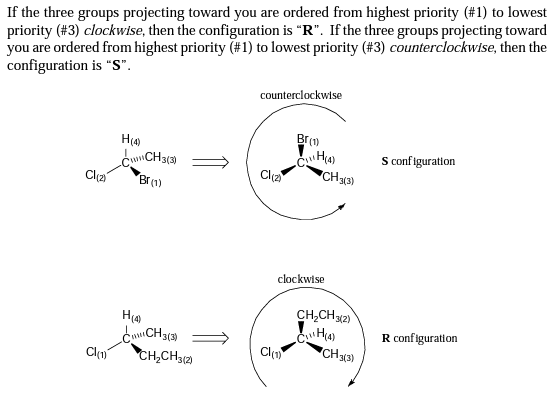
D and L configuration is an old classification that is rarely used by scientists, but is commonly used by dilletantes in the popular press and cosmetic companies who are clueless about chemistry, especially stereochemistry. D- and L- as incorrectly used by dilletantes is said to have been used to point out optical rotation in the early days that preceded a knowledge of stereochemistry. Unbeknownst to the dilletantes is that optical rotation is indicated by lowercase “d” and “l”, not uppercase. The modern way of describing chirality of molecules is the R-S system. If you want to understand how chirality is determined using the R,S system, here’s a simple guide, and a summary diagram is given below.
How did D and L originate, and why the confusion? D and L were originally used by Prof. Dr. Emil Fischer, Ph.D., in about 1891, when he was busy determining the configurations of all the sugars (glucose) by building them from d-glyceraldehyde, which has one chiral center. Chiral centers were already known to exist, although scientists were not able to determine their absolute configuration until about 1951. The idea of the chiral center was developed by a Dutch chemist, Prof. Dr. Jacobus Henricus van ‘t Hoff, Ph.D., in 1874, the first scientist to be awarded the Nobel prize in chemistry.
Prof. Dr. Emil Fischer, Ph.D., working in Germany, decided that d-glyceraldehyde was what we would now call “R”. Since his method of building sugars from D-glyceraldehyde preserved the original chiral center, he was able to determine that all the sugars he built also had D configuration in their last chiral center; that’s why we talk of “D-sugars.” In other words, building from a D-sugar led to the building of other D-sugars. Big D and Little D simply referred to sugars built from d-glyceraldehyde.
Back in the day when I lectured students about biochemistry, I would introduce D and L as a historical fact that they will have to deal with because of misinformation by non-chemists in the medical literature. Let’s review:
We now use a different system that is absolute in determining the chirality of molecules, and it uses R and S. Here’s a summary:
While the chiral (R)-mandelic acid (R-MA) is important for the drug industry because it’s a useful chiral building block for the synthesis of aromatic drugs, it is of crucial importance in the chemical and pharmaceutical industry. In humans, S-mandelic acid undergoes rapid chiral inversion to R-mandelic acid. So a racemic mixture of the R- and S- enantiomers is of little importance when using mandelic acid for topical skin applications, even if the R- and S- were shown to have different effects – and they haven’t been found to have different effects. Chiral chemicals often have functionality in both enantiomers, often with the function of each enantiomer acting at different pathways. The function of R- versus S- for many chemicals, including drugs, has not been determined.
Possible Toxicity of Using Mandelic Acid With Only One Steroisomer (enantiomer)
Here’s why you don’t want to use pure R-mandelic acid. (R)–MA is mainly synthesized chemically. The cyanide-based method involved two-step reactions including cyanation of benzaldehyde using either NaCN or transition metal catalysts, such as titanium or vanadium complexes of chiral ligands, followed by the hydrolysis of mandelonitrile using HCl to give enantiopure (R)–MA (Blacker and Houson 2002; Corson et al. 2003). This method requires the use of highly toxic cyanide and expensive transition metal catalyst together with chiral ligands but gives unsatisfied ee (meaning it doesn’t yield enantiomer excess, i.e. it doesn’t yield just the R- enantiomer), low overall yields, and generates a lot of by-products and large amount of waste. The dichloroacetophenone-based method involved the chlorination of acetophenone with chlorine, followed by alkaline hydrolysis by NaOH at 65 °C and the acidolysis with HCl. This method requires the use of toxic and dangerous Cl2, high temperature, and also suffers from side products problems (mono, tri-choloroacetophenone) (Aston et al. 2003).
Bottom line, and practically speaking, chemical methods are mainly used to produce racemic Mandelic Acid (not chiral Mandelic Acid) because it works, it’s clean (not toxic), it’s inexpensive, and it’s sustainable. It makes sense.
Having committed malpractice and losing his medical license, John Sanderson started a company called AnteAge, selling potentially dangerous products to unsuspecting victims. Negligence, repeated negligence, and sexual misconduct with his patients was his contribution to medicine. Now he wants to sell you products for your skin.He also has someone write a blog for him that not only demonstrates his total incompetence yet again, but he projects on others what he does daily – namely lie and commit unethical acts.
Mr. Sanderson is a physician who attained a bachelor’s degree in medicine from Canada. This program is 5 years in college total, and the curriculum apparently doesn’t teach ethics or compassion for others.
John Sanderson, M.B.B.S. (bachelor’s degree in medicine) who lost his medical license for negligence and repeated negligence, and sexual misconduct with a female patient.
If you want to read about Mr. Sanderson’s exploits as a practicing physician, look him up here.
I’ve selected a few excerpts shown below:
Sanderson previously was a family practice physician with an undergraduate medical degree – a bachelor’s degree in medicine. Once Sanderson finished his Canadian undergraduate degree in medicine, and once he passed the medical board test in the US, regulations permitted him to use the designation “M.D.” Sanderson frequently finds himself in disputes with other companies, one of which apparently exposed that Sanderson committed domestic violence.
Sanderson was not trained as a dermatologist and was not board certified. He obviously has little to no understanding of the skin’s powerful immune system, and no idea of how bone marrow mesenchymal stem cells work in the body. Upon losing his medical license, he started a company to do further harm to people by having them use products that induce inflammation and potentially cancer. The other physicians who is part of AnteAge and the co-blogger with Mr. Sanderson, is George Taylor, a retired anesthesiologist. Like Sanderson, Taylor has no science background and no published scientific papers. So ignorant is this guy that he has a video saying that red blood cells have no signaling capacity. That they don’t have or react to cytokines. Sorry, George. They do. I’d hate to have this sleepy guy putting me to sleep on the operating table.
Trying to understand why a company would bring a proinflammatory, possibly pro-oncogenic product to the market, I looked closer at the company. Because John Sanderson is not a scientist, and has never listed that he has any scientific publication, only misleading blogs, I wondered how did he come to choose his technology. I discovered that Sanderson had enlisted fellow Canadian, Jonathan Lakey, Ph.D. as his scientific advisor. To no surprise, the man who had lost his medical license because of incompetence had hired a scientist, Jonathan Lakey, who had been fired from his university because of fraud.
A non-profit government organization in Canada fired Jonathan Lakey for the same reason:
Then Jonathan Lakey was charged with fraud and racketeering at one of the companies in which he was an officer:
Jonathan Lakey’s involvement with a number of other companies that are pump and dump schemes has made the news a number of times. Clearly, using a product on your skin from this dynamic fraudster-incompetence duo is a bad choice – they do not have anyone’s well being in mind.
There are other skin care companies led by physicians. I suggest if you’re interested in their products, go to the state medical board website in which they practice, and look at the current status of their medical license. For example, you can search physicians in California here, and in Colorado here. You may be surprised what you find. Simply type in their name, and you’re likely to find disiplinery actions and loss of license.