Adding life to years is a paradigm shift that has given rise to a new concept: healthspan — Increasing the length of time a person can live in good health, with physical, cognitive, emotional resilience, and a feeling of well being.As the largest organ in the body, and in bidirectional communication with the whole body, skin health not only reflects systemic healthspan, but is partially causative in systemic healthspan.
Research into exceptional longevity has revealed a critical insight: Healthy aging is not defined by preserving a “young” phenotype, but by sustaining stable, resilient, and well‑adapted cells and tissues over time.Recent data and new conceptualizations have fundamentally reframed how we think about both aging and intervention. In this paradigm shift, healthspan is not simply about preserving youth, rather it is about supporting healthy biological adaptation over time. Therefore, instead of “anti-aging,” the new rubric is “longevity.” For decades, the concept of longevity was commonly framed narrowly, as “how long can we live?” Now, that question feels incomplete and not aligned with how people experience aging. Healthy aging is no longer about reacting to decline, rather sustaining healthspan during an increased lifespan is what we now consider.
Considering the skin, this means using products with efficacy, not just coverups and quick fixes. Many products will use ingredients that fill lines and wrinkles and use minerals to even the skin tone, neither of which impart health to the skin – they’re just coverups. Other products reduce lines and wrinkles for a few hours by stretching the skin and, again, impart nothing healthy to the skin. Instead, look for products that are backed by science and use proper laboratory engineering technolgies that bring health to the skin. Healthy skin is beautiful skin. Is every ingredient in the product chosen carefully? Some products will include efficacious ingredients, but then chose other ingredients that negate the efficacy of that carefully chosen ingredient. Case in point – how many times have I seen what could have been a good product given efficacious ingredients, but they negate the positive by using ingredients like phenoxyethanol.
Preventing and attenuating cellular senescence (senomorphics) is now a key consideration in scientific study, and indeed, in skin care. But science takes a back seat on the internet. Instead of science, the “clipping economy” has become the backbone of the entire internet. Cheaper than traditional advertising, and often spewing fake science, people and companies employ bots and paid users to generate fake hype for everything from government to supplements to skin care. The internet has become so saturated with this fakery that now almost everyone has to do it to compete. But I don’t. My blog is not glossy and full of fakery, rather it’s didactic. That’s why professionals in the skin care industry reach out to me for my expertise.While not using clickbait and hype means my viewership is low, but what I deliver to the reader is high quality and based on evidence and rational thought. Whether it’s using my patented S2RM technology for skincare or nervous system repair, our technology at NeoGenesis is a paradigm shift in healthspan technologies.
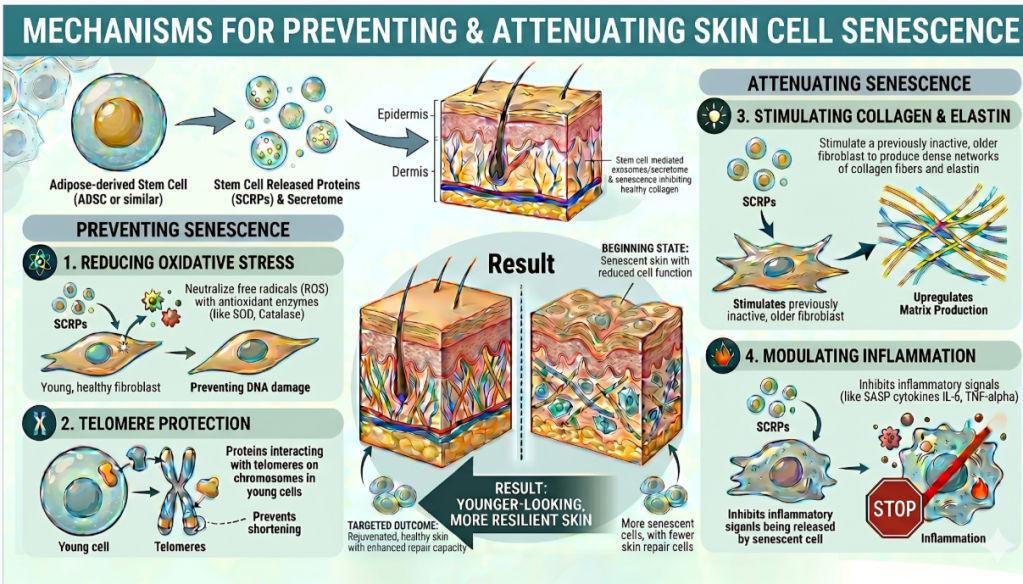
Some of the mechanisms by which NeoGenesis Recovery helps to optimize skin longevity (Picture by Kevin Wiener of NeoGenesis).
Whether it’s the dermis and its rich extracellular matrix, barrier function, or the skin’s microbiome, all must be optimized for healthspan and lifespan. NeoGenesis features technologies that I developed in our laboratories; technologies that improve the structure and function of the dermis and its rich extracellular matrix, barrier function, and the skin’s microbiome.
As a professor of neuroscience, I give an example of bidirectional communication between skin and brain. Within the skin–brain connection, psychological stress triggers neuropeptide release from the brain that exacerbates inflammatory skin conditions such as psoriasis. Conversely, chronic skin inflammation signals back to the brain these inflammatory messages, influencing neural development and behavior.
As a consumer, if you are overwhelmed by the constant churn of product launches, look no further than the S2RM technology. I launched the technology in 2010 with BioRegenerative Sciences, and that morphed into a consumer-friendly technology at NeoGenesis in 2014. S2RM is a natural, exosome and secretome-based multifunctional product using the molecules secreted from skin stem cells. While so-called discovery of new ingredients, often only the discovery of a new way to offer marketing hype, once drove excitement in the market, now it’s creating consumer fatigue. People are choosing fewer products, products that work, gravitating toward products with clear purpose, multifunctionality and proven results. Skin minimalism is no longer a trend, it’s becoming a mindset. NeoGenesis Recovery is the ultimate in skin minimalism by using one product that contains hundreds of natural stem cell derived proteins that target hundreds of pathways simulataneously to yield long term efficacy and optimizing skin longevity.
Stay with me in my blog, I’ll have more to say about how NeoGenesis Recovery reduces skin inflammation leading to improved longevity, how Barrier Renewal Cream rebuilds barrier function to reduce inflammation and improve longevity, and MB-2 and MB-1 to restore the microbiome – a very important part of skin longevity.
Using GLP-1 agonist drugs has a number of detrimental consequences to human skin, including inhibiting the proliferation, differentiation, and metabolic acitivty of human adipose mesenchymal stem cells (ADSCs). To restore ADSC activity and mimic their activity in the skin, NeoGenesis Recovery, containing the molecules secreted from metaboloically active ADSCs, should be applied to the face to prevent and remediate the negative consequnces of GLP-1 agonists on the skin and its ADSCs.
“Ozempic face” and facial aging have been observed as side effects in many patients after glucagon like peptide 1 receptor agonists (GLP-1RA) therapy for type 2 diabetes mellitus (T2DM) and obesity. While recent studies have found that GLP-1 agonists help the patient reduce weight, and that they also help people with obesity lower their high blood pressure and reduce their odds of heart attacks or strokes, many people are now using GLP-1 agonists just to lose weight. Some physicians are doling these drugs out like candy and all the person wanting them has to do is go online and a physician will sell you the drug. It’s big business and the drug companies can’t keep up with the demand and as a result are raising their prices. So many people taking these drugs means that many, many people are experiencing the negative side-effects of GLP-1 agonists, including a face so sunken that they become unregonizable.
The rapid weight loss observed with GLP-1RA has been implicated in facial aging. However, recent evidence suggests further pathophysiological mechanisms for this side effect beyond just weight loss.
For example, GLP-1RAs were shown to significantly and effectively inhibit the in vitro proliferation and adipogenic differentiation of ADSCs within a few days of exposure, while simultaneously enhancing the production of adiponectin (increases insulin sensitivity) and increasing the fatty acid oxidation (Increasing energy) in adipose tissue. The inhibition of mature adipocyte formation was shown to reduce the presence and activity of fibroblasts in regenerating dermis. Further, in ADSCs, glucose uptake was significantly reduced; the absence of glucose in the ADSCs results in a deficiency of adenosine triphosphate (ATP), leading to cellular dysfunction, damage, aging, and apoptosis of precursor cells.
Importantly, human adipose tissue-derived stem cells (ADSC) secretome display various therapeutically relevant effects in regenerative medicine, such as induction of angiogenesis and tissue repair and regeneration. The benefits of ADSC secretome are primarily orchestrated by trophic factors that mediate autocrine and paracrine effects in host cells (Silveira et al, 2022); this means the ADSC secretome not only provides benefit to other cells, such as dermal fibroblasts and adipocytes, but also to the ADSCs themselves through autocrine effects.
Also, Wang et al. 2024 reviewed how ADSC-derived exosomes regulate inflammatory signaling within adipose tissue, with distinct cargo compared to mature adipocyte exosomes. ADSC exosomes contain anti-inflammatory miRNAs (miR-21, miR-24, miR-26) that modulate macrophage polarization and cytokine production within adipose tissue.
While there are some clear benefits to the skin in some patients using GLP-1 agonists such as reducing Advanced Glycation Endproducts (AGEs), there are a number of detrimental effects, such as reduced function of ADSCs and fibroblasts, that can be mitigated or prevented by using NeoGenesis Recovery, containing ADSC secretome.
References
Cantini G, Di Franco A, Samavat J, Forti G, Mannucci E, Luconi M. Effect of liraglutide on proliferation and differentiation of human adipose stem cells. Mol Cell Endocrinol. 2015 Feb 15;402:43-50.
Lee HM, Joo BS, Lee CH, Kim HY, Ock JH, Lee YS. Effect of Glucagon-like Peptide-1 on the Differentiation of Adipose-derived Stem Cells into Osteoblasts and Adipocytes. J Menopausal Med. 2015 Aug;21(2):93-103.
Ridha Z, Sabrina Guillen Fabi, Raheel Zubair, Steven H Dayan, Decoding the Implications of Glucagon-like Peptide-1 Receptor Agonists on Accelerated Facial and Skin Aging, Aesthetic Surgery Journal, Volume 44, Issue 11, November 2024, Pages NP809–NP818,
Silveira BM, Ribeiro TO, Freitas RS, Carreira ACO, Gonçalves MS, Sogayar M, Meyer R, Birbrair A, Fortuna V. Secretome from human adipose-derived mesenchymal stem cells promotes blood vessel formation and pericyte coverage in experimental skin repair. PLoS One. 2022 Dec 19;17(12):e0277863
Wang Y, Li Q, Zhou S and Tan P (2024) Contents of exosomes derived from adipose tissue and their regulation on inflammation, tumors, and diabetes. Front. Endocrinol. 15:1374715.
Did you know scientists have discovered that topical sunflower seed oil helps to rebuild the stratum corneum and barrier function? Or that topical safflower oil can help to regrow hair and help to close wounds. Did you know that consuming seed oil, full of polyunstaurated fats, is healthier than eating coconut oil, which is 90% saturated fat. Consuming staurated fat leads to heart problems and dysbiosis, among other problems.Did you know that some seed oils, such as high oleic sunflower seed oil, tends to have higher stability than the high linoleic varieties of oils?Or that safflower seed oil contains extremely stable oleosomes?These are the reason why I formulate with these two oils.They provide essential oils (oils the skin needs to aquire to be healthy but are not made by the skin) and they provide numerous benefits to the skin.If the seed oils are extracted carefully, such as expeller pressed, and then formulated in a cold-process, the seed oils are of great benefit to the skin.
Listening to some unknowledgeable and outspoken people on TikTok, YouTube, including some pharmacists, or any of a number of podcasts, the oil extracted from plant seeds is poisoning us. RFK, Jr., who should have stuck with being an environmental lawyer, has jumped on this inane bandwagon. I think his cerebral arteries must be clogged with beef tallow (50% saturated fat) and advanced glycation end products from the fries he eats. Other people, such as the physician Mark Hyman are telling people to eat unhealthy coconut oil instead of seed oils – I guess he’s trying to drum-up business. Coconut oil induces inflammation and metabolic disorders, and a coconut oil- high fat diet has been found to cause dysbiosis associated with an increased risk of colorectal cancer. Further, diets rich in saturated fats, such as coconut oil, may contribute to mitochondrial dysfunction, protein aggregation, and neuronal degeneration. Recent studies (McCright et al, 2025) also find that saturated fats exacerbate asthma and promote lung myeloid cell inflammasome activation and IL-1β–mediated inflammation in mice and humans.
Instead of pseudoscience from RFK, Jr, try some science from Prof. Dr. Christopher Gardner, Ph.D. on a recent podcast. “It’s so odd that the internet has gone wild demonizing these things [seed oils],” said Dr. Christopher Gardner, Ph.D., a professor of medicine at Stanford University School of Medicine in California and a nutrition scientist at the Stanford Prevention Research Center. “They are not to be feared.” Dr. Gardner says seed oils contain high levels of omega-6 fatty acids, a polyunsaturated fat the body needs but cannot produce itself, so it must come from foods. Polyunsaturated fats help the body reduce bad cholesterol, lowering the risk for heart disease and stroke. The American Heart Association supports the inclusion of omega-6 fatty acids as part of a healthy diet. Studies of linoleic acid, found in seeds, finds the seed oils benefit cardiovascular function.
Seed Oils in Topical Skincare Products
Some seed oils, such as sunflower seed oil, are great for the skin. Sunflower seed oil helps to rebuild skin barrier function. In contrast to sunflower seed oil, topical treatment with olive oil significantly damages the skin barrier, and therefore has the potential to promote the development of, and exacerbate existing, atopic dermatitis.
Sunflower Seed Oil
Notice sunflower seed oil (SFSO) is used by dermatologists at UCSF, such as Prof. Dr. Peter Elias, M.D. and his colleagues, in an inexpensive product for building the epidermis and barrier function: https://pmc.ncbi.nlm.nih.gov/articles/PMC9078150/. There are other products that work better, but they are more expensive because of ingredients like oleosomes, Triple Lipid Technology and Natural Mositurizing Factors, things that I’ll explain later. The product developed by Prof. Elias and colleagues features sunflower seed oil, something that is less expensive but provides benefit to barrier function. SFSO activates PPAR-alpha, which has numerous benefits in the epidermis (increased lipid production and lamellar body formation, and differentiation of keratinocyes) that help to rebuild natural barrier function. Sunflower seed oil contains oleosomes if cold-processed and not refined. Oleosomes are specialized plant organelles that protect the oil, and I’ll describe in the next section.
From Elias et al (2022): The putative mechanisms by which a topical optimised mixture improves permeability barrier homeostasis. In the mixture, petrolatum and lanolin instantly improve the permeability barrier, while glycerol improves barrier (stratum corneum, SC) hydration and accelerates permeability barrier repair. Linoleic acid in both sunflower oil and borage oils activates peroxisome proliferator-activated receptors (PPAR), resulting in increased production of lipids and antimicrobial peptides, and stimulation of lamellar body secretion and membrane maturation. Consequently, both permeability barrier and antimicrobial barriers are improved.
Safflower Seed Oil and its Oleosomes
I’ll also described the benefits of safflower seed oil (SSO), and the oleosomes contained within. SSO has antioxidant and antimicrobial activity, helping to heal wounds. The potential uses of SSO for skin care are under intense investigation given what is already known of this oil. For example, recent results indicate that SSO and its active compound acacetin can prevent UVB-induced MMP-1 expression, which leads to skin photoaging.
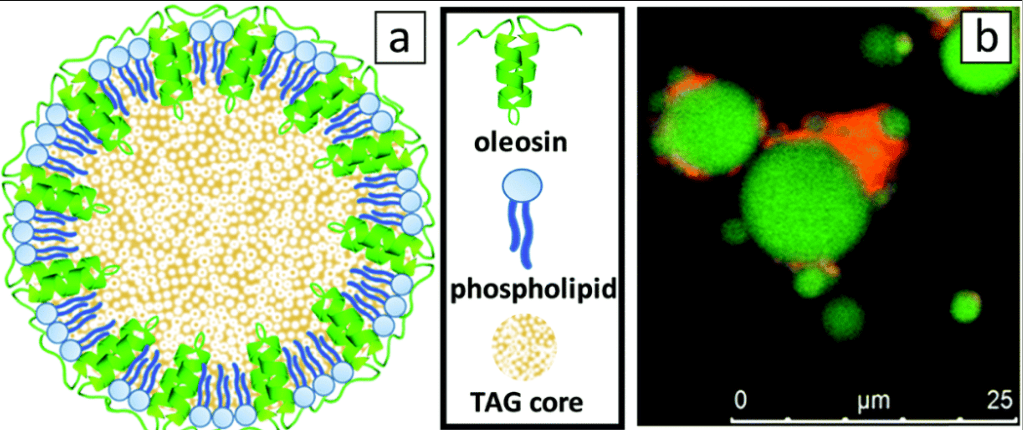
From Karefyllakis et al (2019):2D-model of an oleosome with an emphasis on the configuration of the membrane, composed from a monolayer of phospholipids with the hydrophobic oleosin proteins anchored in the triacylglyceride (TAG) core (sizes not to scale), and (b) CLSM (confocal laser scanning microcope) image of SFO stained by Nile Blue showing lipids in green and proteins in red.
Safflower oleosomes are of interest in part because the plant seeds uniquely contain a large amount of oil bodies (oleosomes) and low water content, resulting in decreased hydrolytic properties and lower protein degradation. Within the oil, tocopherol or vitamin E occurs naturally. Looking at the evolution of plant seeds, the primary function of oleosomes is to safely store the seed energy source in the form of triacyglycerols (vegetable oil) during dormancy of the seed and then use it during germination, and to protect the seeds against environmental stressors. To achieve this, a sophisticated structure has evolved where oleosomes are equipped with a membrane that covers the triacylglycerols (TAGs) core, imparting physical and chemical stability. The membrane acts as a shield, preventing the oxidation of the TAGs. The membrane is dilatable and consists of a continuous monolayer of phospholipids that contains a number of proteins, mostly oleosins, embedded in the membrane. Triacylglycerols, also known as triglycerides, are a type of lipid composed of a glycerol molecule bonded to three fatty acids. They are the main constituents of body fat in animals and vegetable fats. Triacylglycerols serve as a crucial energy reserve, storing more than six times the energy of glycogen per gram. The seeds need this energy to germinate.
The oleosomes we use at NeoGenesis are naturally and sustainably extracted from the seeds of safflower (Carthamus tinctorius). The herbaceous non-GMO plant is cultivated and harvested in California, USA, without the use pesticides and with low water requirements. The manufacturer with whom we work, Sharon, uses a proprietary aqueous extraction cold process, comprising: grinding the seeds with aqueous medium, centrifugation and separating the liquids from the solids by centrifugation again before isolating the oleosomes. This process keeps the oleosomes fully intact, maintaining the micro-oil bodies as they occur naturally, with their full qualities and capabilities. Further, cold processing retains the antioxidants, vitamins and minerals. The result is an oil-in-water (o/w) emulsion with natural properties that provide many skin benefits. Biophysical studies of the oleosome have characaterized the oleosomes’ high physical stability, and have called for bioinspired construction of oil structures capable of protection and delivery of ingredients to the skin, all based on the remarkable evolutionary structure of the oleosome.
Sea Buckthorn Oil(Berries, Pulp, and Seeds)
Sea Buckthorn Seed Oil (SBSO), which typically contains the oil from the berries and pulp too, is another highly prized oil for skin care. One of the key reasons I use it in my topical skin care formulations is the high level, about 50%, of Omega-7 fatty acids. SBSO has been found to aid wound healing and increases telomerase activity, and decrease 3-nitrotyrosine. Inhibiting 3-nitrotyrosine (3-NT) is huge because 3-NT is a stress factor and acts as a neoantigen leading to the production of autoantibodies that can destroy skin tissue.
More than Omega-7, sea buckthorn (Hippophae rhamnoides) is valued for its diverse array of bioactive compounds. Cold-pressed extraction is important for retaining the full spectrum of these compounds. The SBSO is typically derived from various parts of the plant, including the whole berry, pulp, and seed, each yielding unique profiles of fatty acids, vitamins (A, C, and E), phytosterols, flavonoids, and carotenoids. SBSO, in particular, is rich in polyunsaturated fatty acids like linoleic acid (omega-6) and linolenic acid (omega-3), as well as the monounsaturated fatty acid palmitoleic acid (Omega-7). SBSO also contains a small amount of saturated fatty acid palmitic acid, monounsaturated fatty acid oleic acid, and trace amounts of myristic and stearic acids, along with minerals such as selenium, copper, zinc, and silicon. Together, this remarkable array of components in SBSO enhance the epidermis’ skin barrier function, structural integrity, and and anti-inflammatory properties, making SBSO a valuable therapeutic agent for conditions such as skin wounds, atopic dermatitis and psoriasis, or any skin condition with inflammation and compromised barrier function.
Other seed oils have been found to provide benefit too. Raspberry seed oil, for example, improve barrier function as measured by decreases of TEWL in human subjects, whereas the comparator oil, coconut oil, had no effect. Let’s stop denegrating seed oils!
Beneficial Seed Oils for Skin
Oil
Key Components
Main Skin Benefits
Skin Types Best Suited For
Rosehip Seed Oil
Linoleic acid, α-linolenic acid, provitamin A (retinoids), tocopherols
Promotes skin regeneration, reduces scars and hyperpigmentation, improves elasticity
Dry, mature, scar-prone
Pomegranate Seed Oil
Punicic acid (omega-5), polyphenols
Strong anti-inflammatory and antioxidant activity, supports skin repair, calms redness
Bottom line, if you’re using coconut oil or olive oil on your skin, your not improving epidermal function, you can be degrading it. Switch to products using evidence-based, scientific knowledge to formulate their products – and, yes, seed oils, providing essential oils, can be great for the epidermis and improving barrier function. For example, if you use the NeoGenesis Barrier Renewal Cream, you’ll benefit from safflower oleosomes, combined with our Triple Lipid Technology (free fatty acids, ceramide, cholesterol) and Natural Moisturizing Factors (NMF) to rebuild the stratum corneum and barrier function. No other company features this combination of ingredients to rebuild the epidermis. And for those with moderate to severe barrier dysfunction, our new MB-2 product provides instantaneous barrier function without the use of petrolatum, along with 5 types of symbiotic bacteria important to rebuilding barrier function and inhibiting Staphylococcus aureus overgrowth, commonly found in skin with disrupted barrier function. One last thing, NeoGenesis S2RM, containing adipose mesenchymal stem cell secretome, helps to rebuild barrier function too!
For those with disrupted barrier function in conditions such as eczema, including atopic dermatitis, I recommend Skin Serum, which contains S2RM and glycerol, Barrier Renewal Cream, which contains oleosomes+ Triple Lipid Technology +NMF, followed by MB-2, containing a non-petrolatum occlusive+5 live symbiotic bacteria. There’s no better way to improve epidermal health and barrier function, and seed oils are part of the rebuild!.
Professor Doctor Andreas Beyer, Ph.D., at the University of Cologne, Institute for Genetics in Germany, along with his research team has discovered that as we age, a critical process in our cells, called gene transcription, speeds up. This process involves making a copy of a specific DNA strand into the form of RNA. When the process occurs too fast, more errors are made. The RNA is then used for a number of things, including making the backbone of proteins. Posttranslational modifications then finish the making of proteins.If the protein’s backbone is error ridden, the protein loses function. Likewise, posttranslational modification (PTM) depends on other proteins, and if they are error ridden, then error ridden PTM will also lead to dysfunctional proteins.
What does this mean for our health? Dr. Beyer says, for example, “Our study is saying that, for instance, having a healthy diet or, this caloric restriction intervention, would improve the quality of the transcription of the RNA production in the cell. And this would then have beneficial effects for the cells in the long run.” The evidence for his statement; mice and worms following a low-calorie diet were assessed to gauge the impact on cell transcription during the aging process. In both scenarios, transcription’s pace was observed to be more measured, resulting in fewer errors.
To validate their experiment’s applicability to humans, they conducted assessments using blood samples from both young and elderly humans. Prof. Dr. Argyris Papantonis, Ph.D., at the University of Gottingen in Germany, one of the principal investigators, remarked, “And when we compared the young cells to the very old cells, in vitro, we got exactly the same results.”
Skin aging is characterized by the accumulation of macromolecular and molecular damage within cells, impaired ability of stem and progenitor cells to promote tissue regeneration, and restore the loss of normal physiology. Chronological aging and photo-aging are two processes of skin aging that although related, have different clinical manifestations and pathogenesis. Chronological aging appears as we age and is affected by factors such as ethnicity, individual epigenetics and exposome, and skin site. It is mainly characterized by dry skin, dullness, lack of elasticity, sagging, discoloration, and fine wrinkles. Histological features include epidermal atrophy, reduction in the number of dermal fibroblasts and collagen fibers, slackening, thinness, and functional disorganization of the cells and matrix. The primary causes are: first, the stem cell dysfunction of keratinocytes, decreased regenerative ability of stem cells in the basal layer of the epidermis leading to a decline in skin renewal and repair ability, ultimately causing aging, and second, due to the accumulation of damage and aging skin dysfunction, fibroblasts lose the ability to reshape the extracellular matrix or have a reduced ability to synthesize and secrete collagen or viscous proteins. Third, aging fibroblasts alter intracellular homeostasis through certain paracrine mechanisms Now we know an important basis for these aging associated deficits is an increase in the speed of making transcripts (RNA made from DNA), and the resulting dysfunction of proteins.
As I have written, proteins being affected by our exposome is the largest factor in diseases, including cancer. A big portion of your exposome is diet. So eat well and ignore David Sinclair, your processing of transcripts in the skin will be renormalized..